
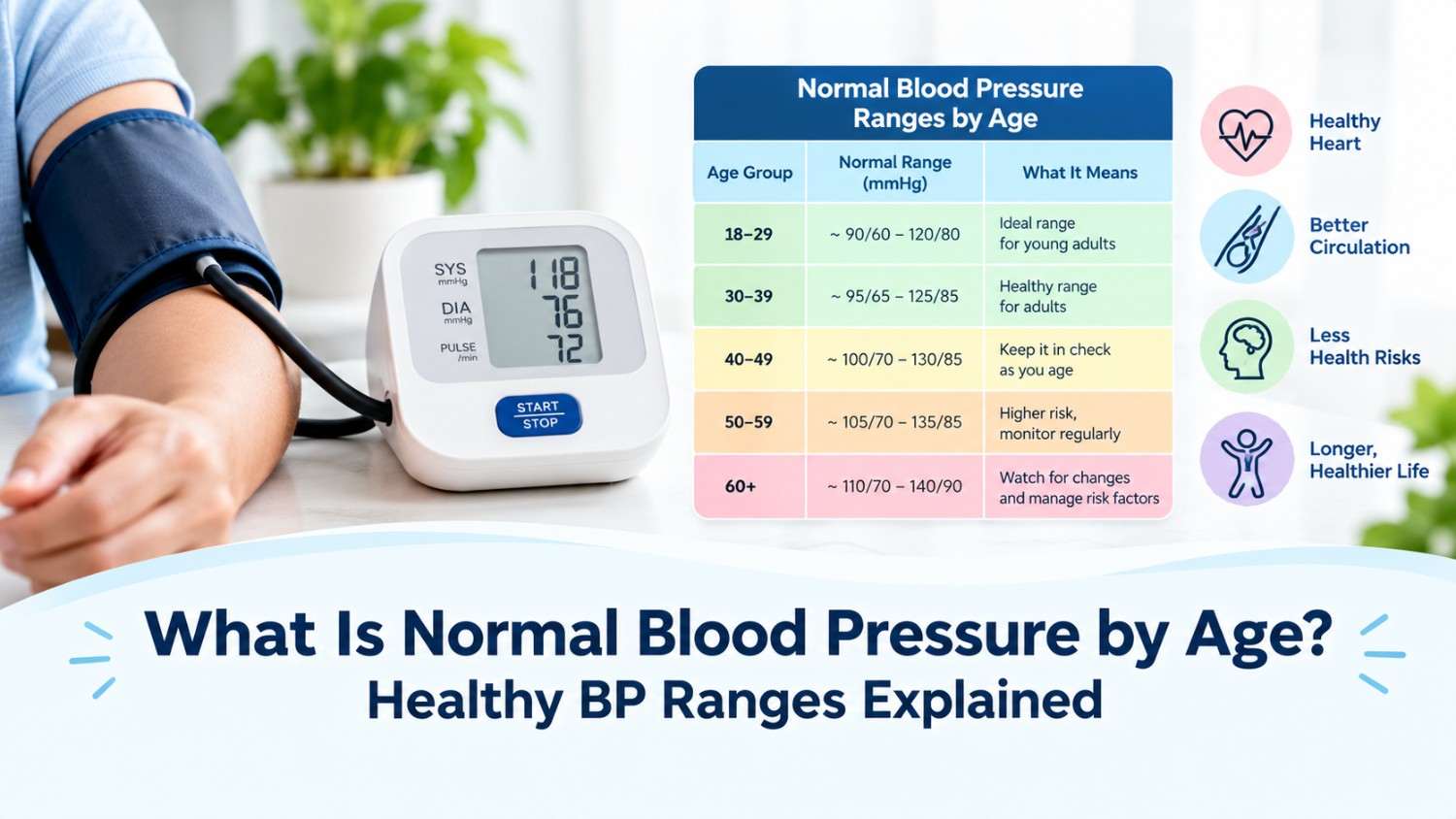
You check your blood pressure at a pharmacy or a health camp, and the screen says 132/84. Is that normal for your age? Should you worry? Many people ask the same question, because blood pressure numbers do change as we get older. High blood pressure (hypertension) affects more than a billion adults worldwide, and many of them don't know they have it, because it usually causes no symptoms.
In this guide, the doctors at UniClinic Health explain what your BP numbers mean, share a simple BP chart by age for adults and children, and tell you when a reading needs a doctor's attention.
A blood pressure reading has two numbers, measured in millimetres of mercury (mmHg):
Systolic (top number) — the pressure in your arteries when your heart beats and pumps blood.
Diastolic (bottom number) — the pressure in your arteries when your heart rests between beats.
So a reading of 120/80 mmHg means a systolic pressure of 120 and a diastolic pressure of 80. Both numbers matter. If either one is high, your doctor will take note.
For adults aged 18 and above, doctors use the same healthy target at every age. The latest American Heart Association and American College of Cardiology guideline (2025) groups readings into these categories.
In India, many doctors follow Indian and European guidelines, which diagnose hypertension at 140/90 mmHg or above. Either way, a reading below 120/80 mmHg is considered healthy for adults of all ages.
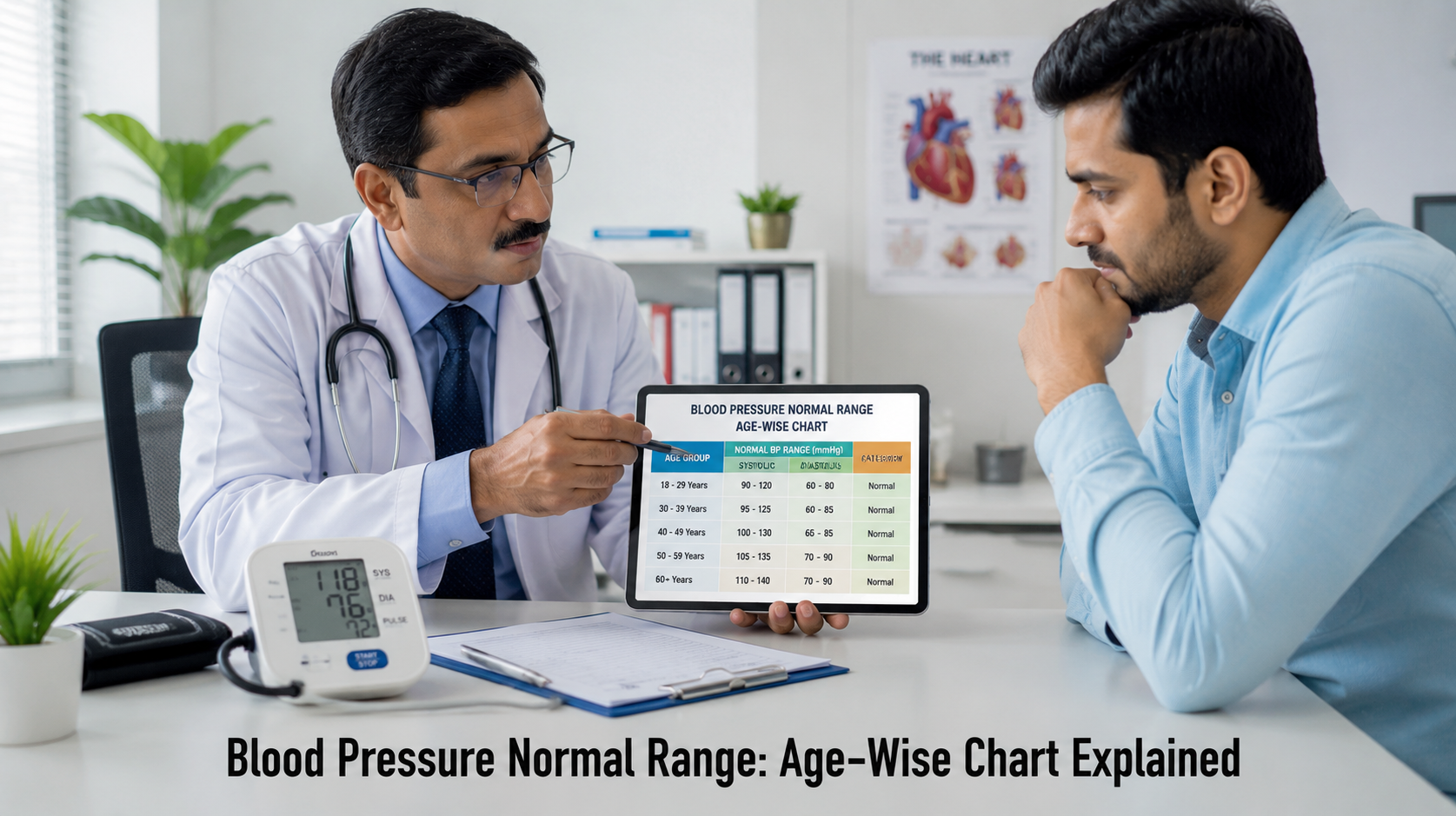
Blood pressure tends to rise slowly as we age. That's why average readings look different for a 25-year-old and a 65-year-old. But remember: an average is not the same as a healthy target. Below 120/80 mmHg is still the goal at every adult age.
The table below shows average blood pressure readings for each age group, based on population data from the U.S. National Center for Health Statistics.
For older adults, your doctor may set a personal target based on your overall health, other conditions and medicines.
A few patterns stand out in this blood pressure chart by age and gender:
Younger women usually have lower BP than men of the same age.
After menopause, women's blood pressure rises faster. By 60 and above, women's average systolic reading is higher than men's.
The systolic (top) number keeps rising with age, while the diastolic (bottom) number often levels off or falls after 60. This happens because arteries become stiffer over time.
Children have naturally lower blood pressure than adults. Doctors don't use the 120/80 cut-off for young children. Instead, they compare a child's reading with charts for their age, sex and height (called percentiles). A reading below the 90th percentile is normal.
The ranges below give a rough guide to blood pressure readings by age in children.
From age 13, doctors use the same categories as adults: below 120/80 mmHg is normal.? If your child's reading seems high, a paediatrician can check it properly with the right cuff size and percentile charts.
Looking at any age group blood pressure data, you'll notice readings climb over the years. The main reasons are:
1. Stiffer arteries — Blood vessels lose their stretch with age, so the heart has to push harder.
2. Plaque build-up — Fatty deposits narrow the arteries over time, especially with high cholesterol.
3. Hormonal changes — Falling oestrogen after menopause raises BP in women.
4. Kidney changes — Ageing kidneys handle salt and fluid less efficiently.
5. Lifestyle over the years — Weight gain, less activity, stress and high salt intake add up.
Rising BP with age is common, but it is not harmless. Even in older adults, controlling blood pressure lowers the risk of heart attack, stroke and kidney disease.
Most people with high BP feel completely fine. That's why it is often called the "silent killer." The only way to know your numbers is to measure them.?
Very high blood pressure may cause:
· Severe headache, especially at the back of the head
· Blurred vision
· Chest pain or a pounding heartbeat
· Shortness of breath
· Dizziness or confusion
· Nosebleeds
If your reading is above 180/120 mmHg along with any of these symptoms, seek emergency care immediately.
Age above 40
Family history of hypertension
Being overweight or obese
Eating too much salt, pickles, papad and packaged or fried foods
Little or no physical activity
Smoking, tobacco chewing and alcohol
Long-term stress and poor sleep
Diabetes, high cholesterol, kidney disease or thyroid problems
A single high reading does not mean you have hypertension. BP changes through the day. Follow these steps for an accurate reading:?
1. Avoid tea, coffee, smoking and exercise for 30 minutes before checking.
2. Sit quietly for 5 minutes, with your back supported and feet flat on the floor.
3. Rest your arm on a table at heart level and use a cuff that fits your upper arm.
4. Don't talk during the measurement.
5. Take two readings, one minute apart, and note both.
6. Check at the same time each day, morning and evening, for one week before your doctor's visit.
· Cut down on salt — Aim for less than 5 g (about one teaspoon) a day, including hidden salt in packaged foods.
· Eat more fruits, vegetables, whole grains and dal, and fewer fried and processed foods.
· Stay active — At least 150 minutes of brisk walking, cycling or yoga each week.
· Keep a healthy weight, especially around the waist.
· Quit smoking and limit alcohol.
· Manage stress with breathing exercises, meditation or hobbies, and sleep 7–8 hours a night.
· Get regular check-ups. Adults over 18 should check BP at least once a year, and more often after 40. A full body health check-up with a lipid profile, creatinine and HbA1c helps spot related risks early.
Book an appointment with a doctor if:
Your home readings are 130/80 mmHg or higher on several days
Your BP stays in the "elevated" range (120–129 systolic) despite lifestyle changes
You have diabetes, kidney disease, high cholesterol or a family history of heart disease
You are pregnant and your BP is higher than usual
Your BP medicines don't seem to be keeping your readings in range
Your child or teenager has a high reading at a school or routine check-up
You have frequent headaches, dizziness or a racing heartbeat
Go to an emergency department immediately if your BP is above 180/120 mmHg with chest pain, breathlessness, weakness on one side, difficulty speaking or vision changes.
A general physician or cardiologist can confirm your diagnosis, find the cause and create a treatment plan that suits your age and health.
At UniClinic, patients can get BP care in both Kolkata and Siliguri. In Kolkata, you can consult cardiologist Dr. Aditya Verma or general physicians Dr. Shounak Biswas and Dr. Madhuparna Paul. In Siliguri, cardiologists Dr. Ashutosh Kumar and Dr. Bibek Agarwal are available.
Blood pressure naturally changes as you grow older, and average readings are higher in older age groups. Still, the healthy target for adults stays the same: below 120/80 mmHg. Children have their own lower ranges, which doctors check against age-based charts.
The best way to protect your heart is simple: know your numbers, check them regularly and act early. If your readings are high, patients in Kolkata can visit UniClinic Kolkata – Cardiology or General Medicine, while patients in Siliguri can consult the UniClinic Siliguri – Cardiology team.
For all adults aged 18 and above, a normal blood pressure is below 120/80 mmHg, whatever your age. Average readings do rise with age. For example, men aged 40–59 average about 124/77 mmHg, and women aged 60 and above average about 139/68 mmHg. These averages show what is common, not what is healthy. For children, normal BP is lower and depends on age, sex and height.
A reading of 130/80 mmHg falls in the Stage 1 high blood pressure range under the AHA/ACC guideline, even at age 60. Under Indian and European guidelines, it is considered "high normal" or elevated. It is common at this age, but it is worth discussing with your doctor. Many people can bring it down with less salt, regular walking and weight control, and your doctor can decide whether you need medicine.
Yes, at different stages of life. Before about 50, women usually have lower blood pressure than men of the same age. After menopause, women's BP rises faster, and by age 60 and above their average systolic reading is often higher than men's. The healthy target of below 120/80 mmHg is the same for both.
A reading above 180/120 mmHg is a hypertensive crisis. Wait five minutes and check again. If it is still that high, or if you have chest pain, breathlessness, severe headache, weakness, numbness, vision changes or difficulty speaking, go to the nearest emergency department immediately.
Blood pressure below 90/60 mmHg is usually considered low (hypotension). Some healthy people naturally have low BP without any problems. But if low BP causes dizziness, fainting, blurred vision or tiredness, especially in older adults, you should see a doctor to find the cause.
Healthy adults should check their BP at least once a year. Check more often if you are over 40, have readings in the elevated range, or have diabetes, kidney disease or a family history of heart disease. If you are on BP medicines, your doctor may ask you to check at home daily for a while.
For test bookings and inquiries: Contact UniClinic
Cardiology | Endocrinology | Laparoscopic Surgery in Obstetrics & Gynecology | Gynecology & Obstetrics | General Medicine | Gynaecology | Orthopedics | Paediatrics | Diabetology | Ultrasound Imaging | Digital X-Ray | Blood Tests
Cardiology | Endocrinology | Laparoscopic Surgery in Obstetrics & Gynecology | Gynecology & Obstetrics | General Medicine | Gynaecology | Orthopedics | Paediatrics | Diabetology | Ultrasound Imaging | Digital X-Ray | Blood Tests
References & Citations
Disclaimer: UniClinic does not represent or warrant that the content or information provided through our blog is accurate, complete, or current, nor that our blog content will be uninterrupted or error-free. We do not guarantee that any defects in our blog content will be corrected, or that our or the server hosting them are free of viruses or other harmful components. UniClinic makes no warranties or representations regarding the use of materials in our blog content concerning their correctness, accuracy, adequacy, usefulness, timeliness, reliability, or otherwise, to the fullest extent permitted by applicable law. Information available via our Platform and blog content may reference products, programs, or services not available in your region. You understand and acknowledge that your sole and exclusive remedy for any defect in or dissatisfaction with our blog content is to cease using them.
6C, Hazra Road, Near Sujata Smriti Sadan, Bakul Bagan, Kalighat, Kolkata, West Bengal 700026
90540 08864
63563 55500
70690 05888
Mon - Sat : 8am - 8pm
Sunday : 8am - 5pm
Quick Links
Company
Resources
Follow Us






.jpg)


 Meaning, Causes, Symptoms, Treatment & Types.png)

