
Medically Reviewed by:
Dr. Aditya Verma
Dr. Ashutosh Kumar
You roll up your sleeve, the cuff tightens, and out comes a number like 120 over 80. But what does it actually mean? And should yours be the same at 25 as it is at 60?
Blood pressure is one of those things we all get measured, yet few of us fully understand. Let me clear it up. We will look at the blood pressure normal range, a simple blood pressure chart by age, and what your readings are really telling you about your heart.
Every time your heart beats, it pushes blood through your arteries. The force of that blood against the artery walls is your blood pressure. It is written as two numbers, like 120/80 mmHg. The top number is systolic pressure, the force when your heart beats. The bottom number is diastolic pressure, the force when your heart rests between beats. Both matter. When your doctor reads your blood pressure, they are checking whether that force is healthy, too high, or too low.
For most adults, the blood pressure normal range is below 120/80 mmHg. That is the sweet spot we aim for. Once readings start climbing, doctors sort them into stages so treatment can be matched to risk. Here is how it breaks down.
A hypertensive crisis, that bottom row, is an emergency. If a reading is that high, especially with chest pain, breathlessness or blurred vision, get medical help straight away.
A high blood pressure range, what we call hypertension, generally starts at 140/90 mmHg by common Indian and World Health Organisation standards, though many guidelines now flag 130/80 as the point to take seriously. The tricky part? High BP usually has no symptoms at all. That is why it is nicknamed the silent killer. It can quietly damage your heart, kidneys, eyes and brain for years. So the only reliable way to catch it is to measure it.
On the other end sits the low blood pressure range, or hypotension, usually taken as readings below 90/60 mmHg. Unlike high BP, low BP often does announce itself. You might feel dizzy, lightheaded, tired or faint, particularly when you stand up quickly. For some people low readings are perfectly normal and healthy. For others, they signal dehydration, a medicine side effect, or an underlying problem worth checking.
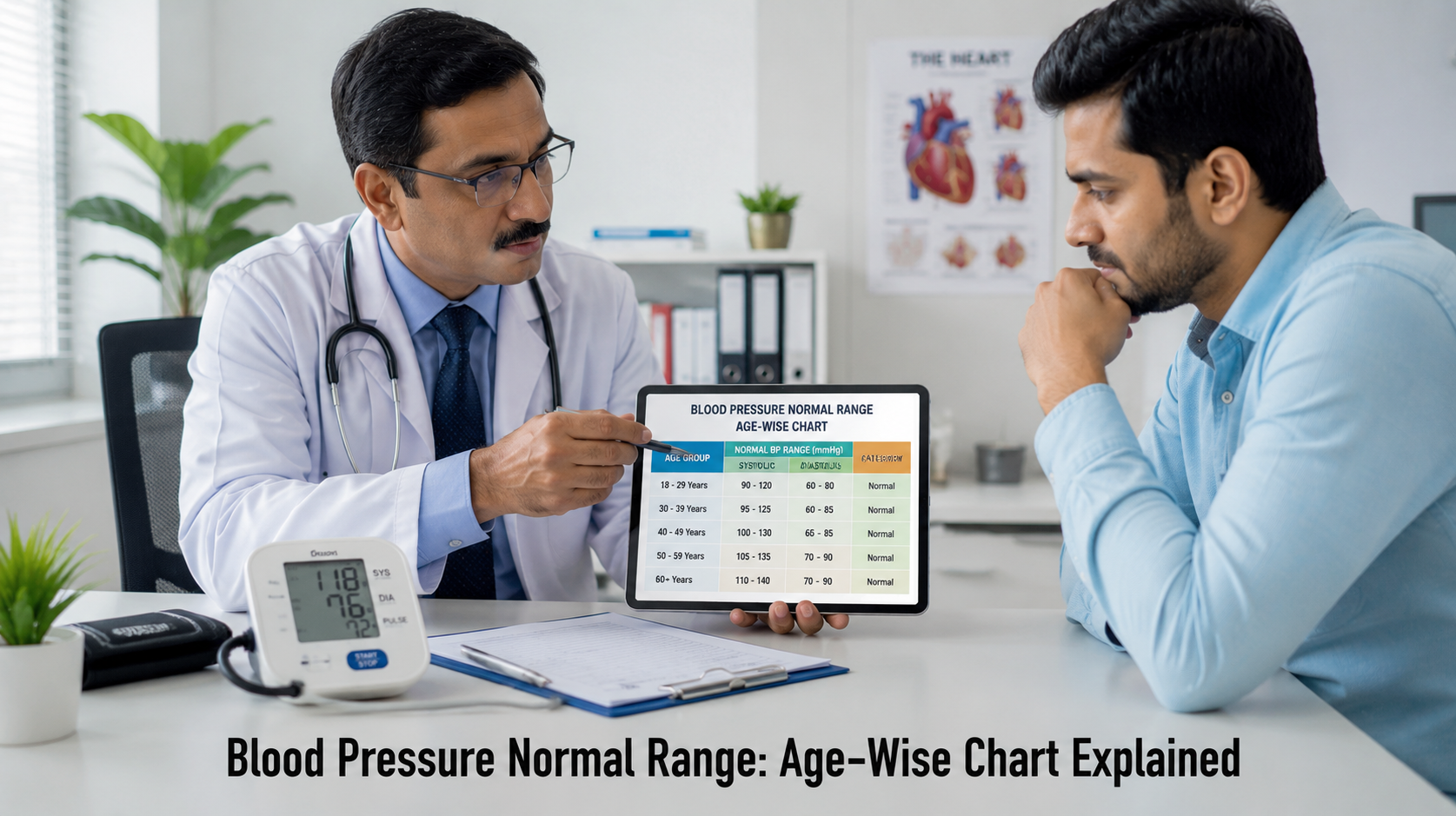
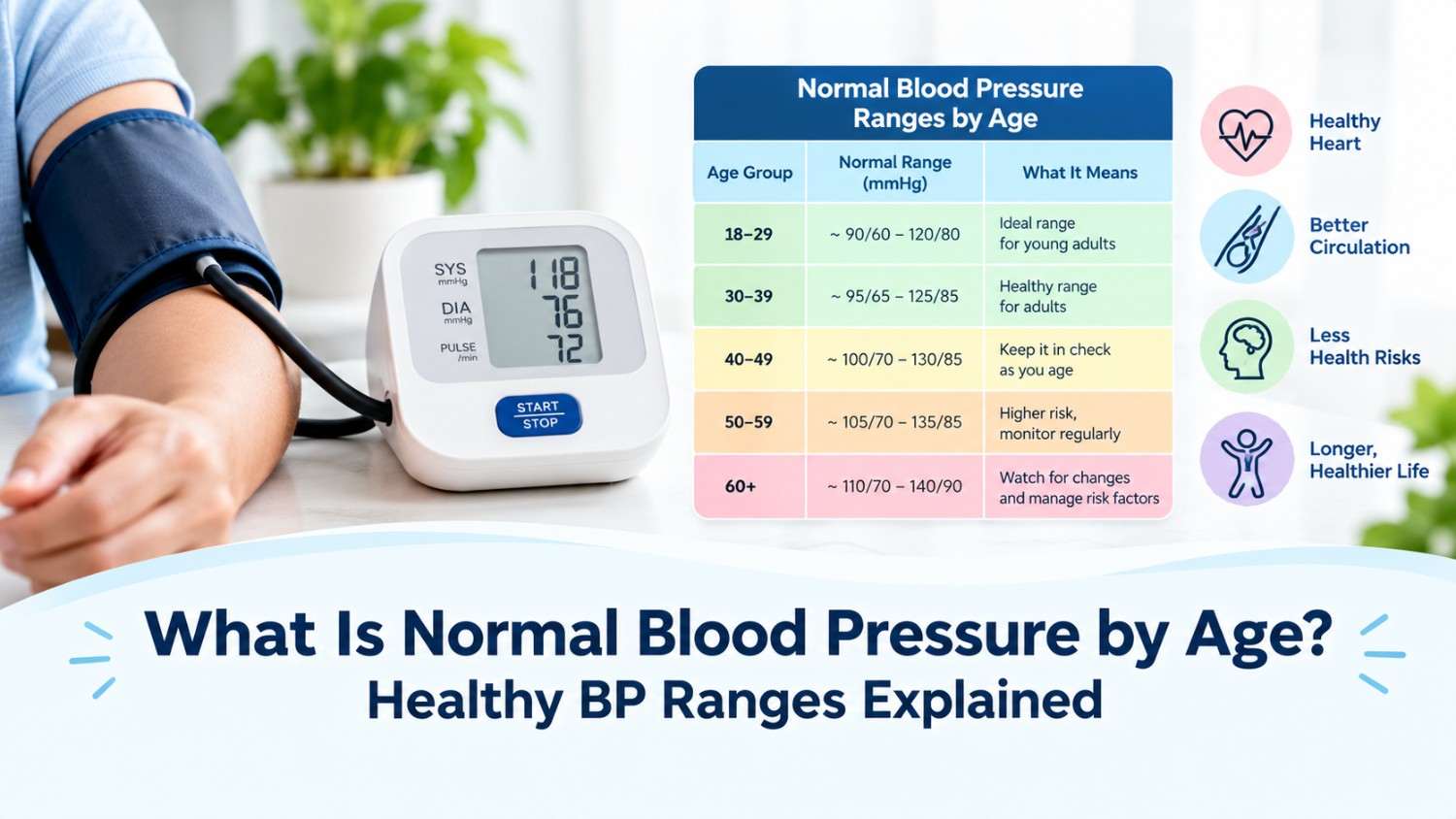
Blood pressure tends to creep up as we age, mostly because arteries stiffen over the years. So a young adult and a senior citizen will not always sit at the same reading. This blood pressure chart by age gives a general guide to normal blood pressure for age. Treat it as a rough reference, not a strict rule.
Whatever your age, the goal for most adults stays close to below 120/80, and ideally under 140/90. Your doctor sets your personal target based on your age, diabetes status and heart risk.
Children have lower blood pressure than adults, and their normal blood pressure for age is judged using special growth charts, not a single fixed number. If a paediatrician flags your child's reading, it will be compared against others of the same age, height and sex.
When we talk about blood pressure types, we usually mean the kinds of hypertension. Primary hypertension is the most common. It builds up gradually over years with no single clear cause, though genes, salt, weight and lifestyle all play a part. Secondary hypertension comes from a specific underlying condition, like kidney disease, thyroid problems or certain medicines, and it can appear more suddenly.
You may also hear of white-coat hypertension, where readings spike simply from the anxiety of being at a clinic, and its opposite, masked hypertension, where readings look fine at the clinic but run high at home. This is exactly why home monitoring is so useful.
The good news is that lifestyle does a lot of the heavy lifting here. Cut back on salt, that means going slow on pickles, papad, namkeen and packaged snacks. Fill your plate with fruits, vegetables and whole grains. Move your body most days, even a brisk 30-minute walk helps. Keep your weight in check, limit alcohol, and if you smoke, quitting is one of the kindest things you can do for your arteries.
Stress matters too. Long hours, poor sleep and constant tension all push your numbers up. And if your doctor has prescribed BP medicine, please take it regularly, even on days you feel completely fine. Stopping on your own is a common and risky mistake.
If you are over 30, or have diabetes, obesity or a family history of hypertension, get your blood pressure checked regularly, at least once a year, and more often if it has been high. A single reading is only a snapshot, so a few readings over time paint the truer picture. At UniClinic, a quick check and, if needed, a full heart and kidney health review can catch problems early, while they are still easy to manage. Our Cardiology team in Kolkata and Cardiology team in Siliguri offer detailed BP evaluation and long-term management plans.
For most adults, the blood pressure normal range stays close to 120/80 mmHg. It tends to rise a little with age, but the aim for older adults is usually to keep it below 140/90 mmHg.
A reading of 130/90 is above the ideal range. The systolic falls in the elevated to Stage 1 band and the diastolic is borderline high, so it is worth monitoring and discussing with your doctor.
A reading above 180/120 mmHg is a hypertensive crisis and needs urgent care, especially with chest pain, breathlessness, severe headache or blurred vision.
Mild cases often improve with less salt, weight loss, regular exercise, limited alcohol and no smoking. Higher readings usually need medication alongside these changes, guided by your doctor.
Check it at the same times each day, usually morning before medicines and evening, after sitting quietly for five minutes. Avoid tea, coffee, smoking or exercise just before measuring.
Not always. If you feel fine, low readings can be normal for you. Treatment is needed when low blood pressure causes dizziness, fainting or fatigue, or points to another health problem.
References & Citations
Metropolis Healthcare - Understanding Blood Pressure Normal Range and Age-Related Chart
World Health Organisation - Hypertension: Key Facts
American Heart Association - Understanding Blood Pressure Readings
Mayo Clinic - High Blood Pressure (Hypertension)
Centers for Disease Control and Prevention - About High Blood Pressure
Disclaimer: UniClinic does not represent or warrant that the content or information provided through our blog is accurate, complete, or current, nor that our blog content will be uninterrupted or error-free. We do not guarantee that any defects in our blog content will be corrected, or that our or the server hosting them are free of viruses or other harmful components. UniClinic makes no warranties or representations regarding the use of materials in our blog content concerning their correctness, accuracy, adequacy, usefulness, timeliness, reliability, or otherwise, to the fullest extent permitted by applicable law. Information available via our Platform and blog content may reference products, programs, or services not available in your region. You understand and acknowledge that your sole and exclusive remedy for any defect in or dissatisfaction with our blog content is to cease using them.
For test bookings and inquiries: Contact UniClinic
Cardiology | Endocrinology | Laparoscopic Surgery in Obstetrics & Gynecology | Gynecology & Obstetrics | General Medicine | Gynaecology | Orthopedics | Paediatrics | Diabetology | Ultrasound Imaging | Digital X-Ray | Blood Tests
Cardiology | Endocrinology | Laparoscopic Surgery in Obstetrics & Gynecology | Gynecology & Obstetrics | General Medicine | Gynaecology | Orthopedics | Paediatrics | Diabetology | Ultrasound Imaging | Digital X-Ray | Blood Tests
6C, Hazra Road, Near Sujata Smriti Sadan, Bakul Bagan, Kalighat, Kolkata, West Bengal 700026
90540 08864
63563 55500
70690 05888
Mon - Sat : 8am - 8pm
Sunday : 8am - 5pm
Quick Links
Company
Resources
Follow Us








.jpg)


 Meaning, Causes, Symptoms, Treatment & Types.png)

