
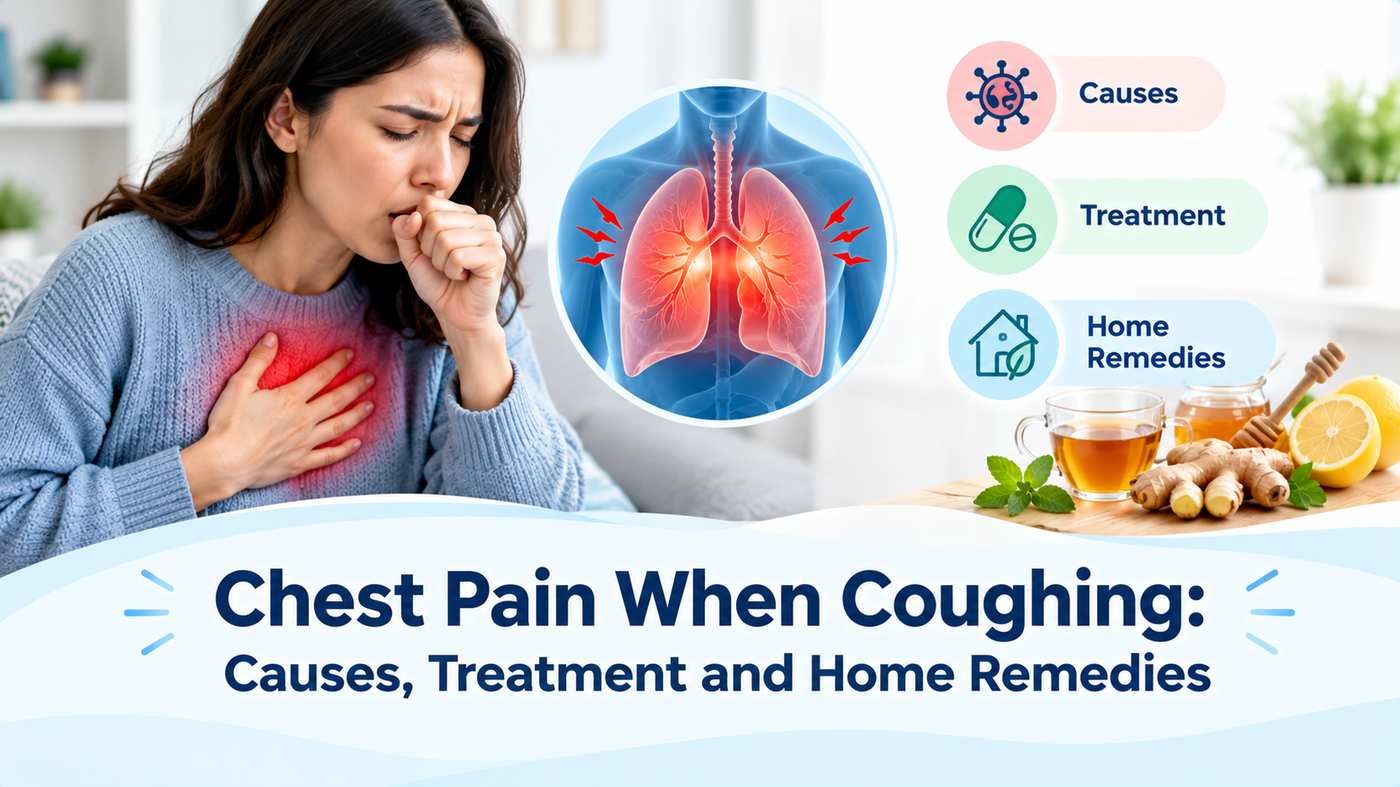
A cough that just won't stop is tiring enough. But when every cough brings a sharp or aching pain in your chest, it can also be worrying. Is it just a strained muscle, or something more serious? In most cases, chest pain when coughing comes from a chest infection, chest congestion or sore muscles from repeated coughing, and it gets better as the cough settles. Sometimes, though, it can be a sign of a lung or heart problem that needs a doctor's care.
In this guide, the doctors at UniClinic Health explain why your chest hurts when you cough, the common causes, simple home remedies to clear mucus, and the warning signs that mean you should see a doctor.
Did you know? Most acute coughs caused by a cold or chest infection last up to 3 weeks, and many clear without antibiotics. In India, a cough lasting 2 weeks or more should be checked for tuberculosis (TB).
Coughing is your body's way of clearing mucus, germs and irritants from your airways. Each cough is a forceful push of air that uses the muscles of your chest, ribs and stomach. When you cough again and again, several things can cause pain:
Sore chest muscles — The muscles between your ribs get strained and tired from constant coughing.
Inflamed airways — Infections like bronchitis make the airways swollen and sensitive, causing a burning or raw feeling.
Irritated lung lining — Some conditions, like pneumonia or pleurisy, inflame the lining around the lungs, causing sharp pain with each cough or deep breath.
Chest congestion happens when mucus (phlegm) builds up in your airways and lungs. It usually follows a cold, flu or chest infection, and is a common reason for a heavy, tight chest and a wet cough. The body makes extra mucus to trap germs, and coughing is how it tries to clear it.
Common chest congestion symptoms include:
A wet, chesty cough that brings up mucus
Thick white, yellow or green phlegm
A heavy or tight feeling in the chest
Chest pain or soreness when coughing
Wheezing or a rattling sound when breathing
Mild shortness of breath
Sore throat, runny nose or blocked nose
Tiredness, body ache and sometimes a mild fever
Many conditions can make your chest hurt when you cough. Here are the most common ones:
Viral infections often start in the nose and throat and move down to the chest. The cough, mucus and inflamed airways can leave your chest feeling sore and congested. This usually improves within one to two weeks.
Bronchitis is swelling of the airways (bronchi) that carry air to the lungs. It causes a persistent cough with mucus, chest soreness or a burning feeling, and sometimes wheezing. Most cases are caused by viruses, and the cough can last up to three weeks.
Pneumonia is an infection of the lungs that fills the air sacs with fluid or pus. It causes a cough with phlegm, fever, chills, breathlessness and sharp chest pain that gets worse with coughing or deep breaths. Pneumonia needs a doctor's care, and is more serious in children, older adults and people with long-term illness.
Repeated, forceful coughing can strain the muscles between your ribs (intercostal muscles). The pain is usually sore or aching, feels worse when you move, twist or press on the area, and slowly eases as the cough gets better.
Pleurisy is inflammation of the thin lining around the lungs (pleura), often after a viral infection or pneumonia. It causes a sharp, stabbing pain that gets worse when you cough, sneeze or breathe deeply.
In asthma, the airways become narrow and swollen. Coughing, wheezing and chest tightness are common, especially at night, after exercise or on exposure to dust, smoke or cold air.
Stomach acid flowing back into the food pipe can cause a chronic cough and a burning pain behind the breastbone. Symptoms are often worse after meals or when lying down.
This is inflammation of the cartilage joining the ribs to the breastbone. It causes sharp or aching pain at the front of the chest that worsens with coughing, deep breaths or pressing on the area.
TB is a bacterial lung infection that is still common in India. Warning signs include a cough lasting 2 weeks or more, coughing up blood, chest pain, evening fever, night sweats and weight loss. TB is curable with proper treatment, so early testing is important.²
Very severe or long-lasting coughing can, rarely, crack a rib, especially in older adults with weak bones. The pain is sharp, located in one spot, and gets much worse with every cough or breath.
Sometimes chest pain with a cough can signal a medical emergency, such as a blood clot in the lungs (pulmonary embolism), a collapsed lung (pneumothorax) or a heart problem. These usually come with sudden breathlessness, severe pain or coughing up blood, and need immediate medical care.
If your symptoms are mild and you have no warning signs, these simple home remedies can help loosen mucus, ease chest pain and help you recover. Here's how to remove cough from chest naturally:
Staying well hydrated keeps mucus thin and easier to cough up. Warm drinks also soothe a sore throat and chest.
How to use: Sip warm water, clear soups, herbal tea or warm water with lemon through the day.
Breathing in warm steam can moisten the airways and loosen thick mucus, making it easier to clear the chest.
How to use: Fill a bowl with hot (not boiling) water, cover your head with a towel, and breathe in the steam for 5–10 minutes. A warm shower works too.
Caution: Keep children away from hot water to avoid burns.
Honey is one of the best-studied home remedies for cough. Research shows it can reduce how often and how badly people cough, especially at night.
How to use: Take one teaspoon of honey on its own, or mix it into warm water or ginger tea, up to 2–3 times a day.
Caution: Never give honey to babies under 1 year old.
Ginger has natural anti-inflammatory properties and is a traditional remedy for cough and congestion in many Indian homes.
How to use: Boil a few slices of fresh ginger in water for 5–10 minutes. Add honey and a squeeze of lemon, and sip while warm.
Turmeric contains curcumin, which has anti-inflammatory effects. A warm glass of haldi doodh at bedtime is soothing for a sore chest and throat.
How to use: Add half a teaspoon of turmeric and a pinch of black pepper to a glass of warm milk.
Tulsi is widely used in Ayurveda for colds and coughs, and a warm tulsi drink can be soothing.
How to use: Boil 8–10 tulsi leaves in water, add honey and drink as tea once or twice a day.
Gargling helps clear mucus from the throat and eases throat irritation that can trigger more coughing.
How to use: Mix half a teaspoon of salt in a glass of warm water and gargle 2–3 times a day.
Lying flat lets mucus collect in your throat and chest, which can make night-time coughing worse.
How to use: Use an extra pillow to keep your head and chest slightly raised while you sleep.
Dry air can irritate the airways. A humidifier adds moisture to the air and helps keep mucus loose.
How to use: Run a cool-mist humidifier in your bedroom at night and clean it regularly to prevent mould.
Hugging a pillow against your chest while coughing (called "splinting") can reduce pain from sore muscles or a chest infection.
How to use: Hold a firm pillow tightly against the painful area each time you feel a cough coming.
Gentle warmth can relax tight, sore chest muscles.
How to use: Place a warm (not hot) towel or hot water bag on your chest or upper back for 10–15 minutes.
Your body heals best with rest. Smoke, dust and pollution can irritate your airways and make the cough worse.
How to use: Get enough sleep, avoid smoking and second-hand smoke, and wear a mask on high-pollution days.
Note: Home remedies help ease mild symptoms but do not replace medical treatment. If your symptoms are severe, getting worse, or don't improve in a week, see a doctor.
Your doctor will ask about your symptoms, listen to your chest with a stethoscope and check your oxygen level. Depending on the cause they suspect, they may suggest:
Chest X-ray — To check for pneumonia, TB, fluid or a collapsed lung. UniClinic offers digital X-ray in Kolkata and Siliguri.
Blood tests — A complete blood count (CBC), CRP or ESR can show signs of infection or inflammation.
Sputum test — To identify the germ causing an infection, including TB.
Lung function test (spirometry) — To check for asthma or COPD.
ECG — If there is any chance the pain is coming from the heart.
Treatment depends on the cause:
Viral infections (cold, flu, most bronchitis) — Rest, fluids and home care. Antibiotics don't work against viruses.
Bacterial infections (such as pneumonia) — Antibiotics prescribed by a doctor. Always finish the full course.
Pain and fever — Paracetamol can ease pain and fever. Take it only as directed.
Thick mucus — Your doctor may suggest an expectorant or mucus-thinning medicine.
Asthma or wheezing — Inhalers that open the airways and reduce swelling.
Acid reflux — Antacids or acid-reducing medicines, plus diet changes.
Tuberculosis — A full course of TB medicines, available free under India's national TB programme.
Don't take cough syrups or antibiotics without a doctor's advice, especially for children. Using antibiotics when they aren't needed can lead to antibiotic resistance.
See a doctor soon if you have:
A cough that lasts more than 2–3 weeks
Fever above 101°F (38.3°C) that lasts more than 3 days
Thick green, yellow or rust-coloured phlegm with fever
Chest pain that gets worse instead of better
Wheezing or mild breathlessness
Night sweats, evening fever or unexplained weight loss
A cough along with diabetes, heart disease, lung disease or a weak immune system
Severe or crushing chest pain, or pain spreading to your arm, jaw, neck or back
Sudden or severe shortness of breath
Coughing up blood
Bluish lips or fingertips
Confusion, fainting or extreme drowsiness
A fast heartbeat with chest pain
These can be signs of a heart attack, blood clot in the lungs, collapsed lung or severe pneumonia.
A general physician can find the cause of your chest pain and cough, order the right tests, and refer you to a respiratory specialist if needed.
At UniClinic, patients can get care in both Kolkata and Siliguri. In Kolkata, you can consult general physicians Dr. Shounak Biswas and Dr. Madhuparna Paul. In Siliguri, general physicians such as Dr. Kuntal Ghosh and Dr. Saikat Datta are available.
Chest pain when coughing is common and is usually caused by a chest infection, chest congestion or strained muscles from repeated coughing. Most cases get better within a few weeks with rest, warm fluids, steam and honey.
But don't ignore a cough that lasts more than 2–3 weeks, chest pain that keeps getting worse, or warning signs like breathlessness, high fever or coughing up blood. Patients in Kolkata can visit UniClinic Kolkata – Respiratory Medicine, while patients in Siliguri can consult the UniClinic Siliguri – Respiratory Medicine team.
Usually not. Most chest pain when coughing comes from a cold, bronchitis, chest congestion or sore muscles, and it eases as the cough improves. However, it can be serious if it comes with high fever, breathlessness, coughing up blood, or severe or spreading chest pain. In that case, see a doctor right away.
To loosen mucus and clear your chest, drink plenty of warm fluids, take steam inhalation 2–3 times a day, have a teaspoon of honey in warm water or ginger tea, and sleep with your head raised. Gargling with salt water and avoiding smoke also help. If the cough lasts more than 2–3 weeks, see a doctor.
Chest congestion from a cold or viral bronchitis usually improves within 1–2 weeks, though the cough can last up to 3 weeks. If it lasts longer, keeps coming back, or comes with high fever or breathlessness, you may need a check-up and tests such as a chest X-ray.
Yes. Frequent, forceful coughing can strain the muscles between your ribs, causing a sore, aching pain that worsens when you move, twist or cough. Rest, a warm compress, holding a pillow against your chest while coughing and treating the cough usually help it heal within a few days to weeks.
Lung or muscle pain usually gets worse when you cough, breathe deeply or press on the chest. Heart pain is more often a pressure, squeezing or heaviness that may spread to the arm, jaw or back, and can come with sweating, nausea or breathlessness. You can't always tell the difference yourself. If you're unsure or the pain is severe, seek emergency care immediately.
Yes, COVID-19 and flu can both cause cough, chest congestion and chest discomfort, along with fever, body ache and tiredness. If you have these symptoms, consider testing, rest at home, and see a doctor if you become breathless or your symptoms get worse.
For test bookings and inquiries: Contact UniClinic
Cardiology | Respiratory Medicine | Endocrinology | Laparoscopic Surgery in Obstetrics & Gynecology | Gynecology & Obstetrics | General Medicine | Gynaecology | Orthopedics | Paediatrics | Diabetology | Ultrasound Imaging | Digital X-Ray | Blood Tests
Cardiology | Respiratory Medicine | Endocrinology | Laparoscopic Surgery in Obstetrics & Gynecology | Gynecology & Obstetrics | General Medicine | Gynaecology | Orthopedics | Paediatrics | Diabetology | Ultrasound Imaging | Digital X-Ray | Blood Tests
References & Citations
1. NHS (UK) — Cough.
2. World Health Organization (WHO) — Tuberculosis: Fact sheet.
3. NHS (UK) — Chest Infection.
4. MedlinePlus (U.S. National Library of Medicine) — Acute Bronchitis.
5. NHS (UK) — Pneumonia.
6. Abuelgasim H, et al. BMJ Evidence-Based Medicine — Effectiveness of Honey for Symptomatic Relief in Upper Respiratory Tract Infections: A Systematic Review and Meta-Analysis.
Disclaimer: UniClinic does not represent or warrant that the content or information provided through our blog is accurate, complete, or current, nor that our blog content will be uninterrupted or error-free. We do not guarantee that any defects in our blog content will be corrected, or that our or the server hosting them are free of viruses or other harmful components. UniClinic makes no warranties or representations regarding the use of materials in our blog content concerning their correctness, accuracy, adequacy, usefulness, timeliness, reliability, or otherwise, to the fullest extent permitted by applicable law. Information available via our Platform and blog content may reference products, programs, or services not available in your region. You understand and acknowledge that your sole and exclusive remedy for any defect in or dissatisfaction with our blog content is to cease using them.
6C, Hazra Road, Near Sujata Smriti Sadan, Bakul Bagan, Kalighat, Kolkata, West Bengal 700026
90540 08864
63563 55500
70690 05888
Mon - Sat : 8am - 8pm
Sunday : 8am - 5pm
Quick Links
Company
Resources
Follow Us









.jpg)


 Meaning, Causes, Symptoms, Treatment & Types.png)

