You've skipped lunch, the office lights feel too bright, and a pain has started behind one eye. Is this just another headache that a cup of tea and some rest will fix, or is it a migraine that's about to take over your day?
Most headaches go away on their own and aren't a sign of anything serious. Migraine is different. It's a health condition in its own right, not simply a bad headache, and it can bring nausea, vision changes and days of feeling unwell. It's common too. In a large community study in Karnataka, about 1 in 4 adults had definite or probable migraine in a single year.
Knowing which one you're dealing with matters, because the treatment and the right next step can be quite different. Here's how to tell them apart.
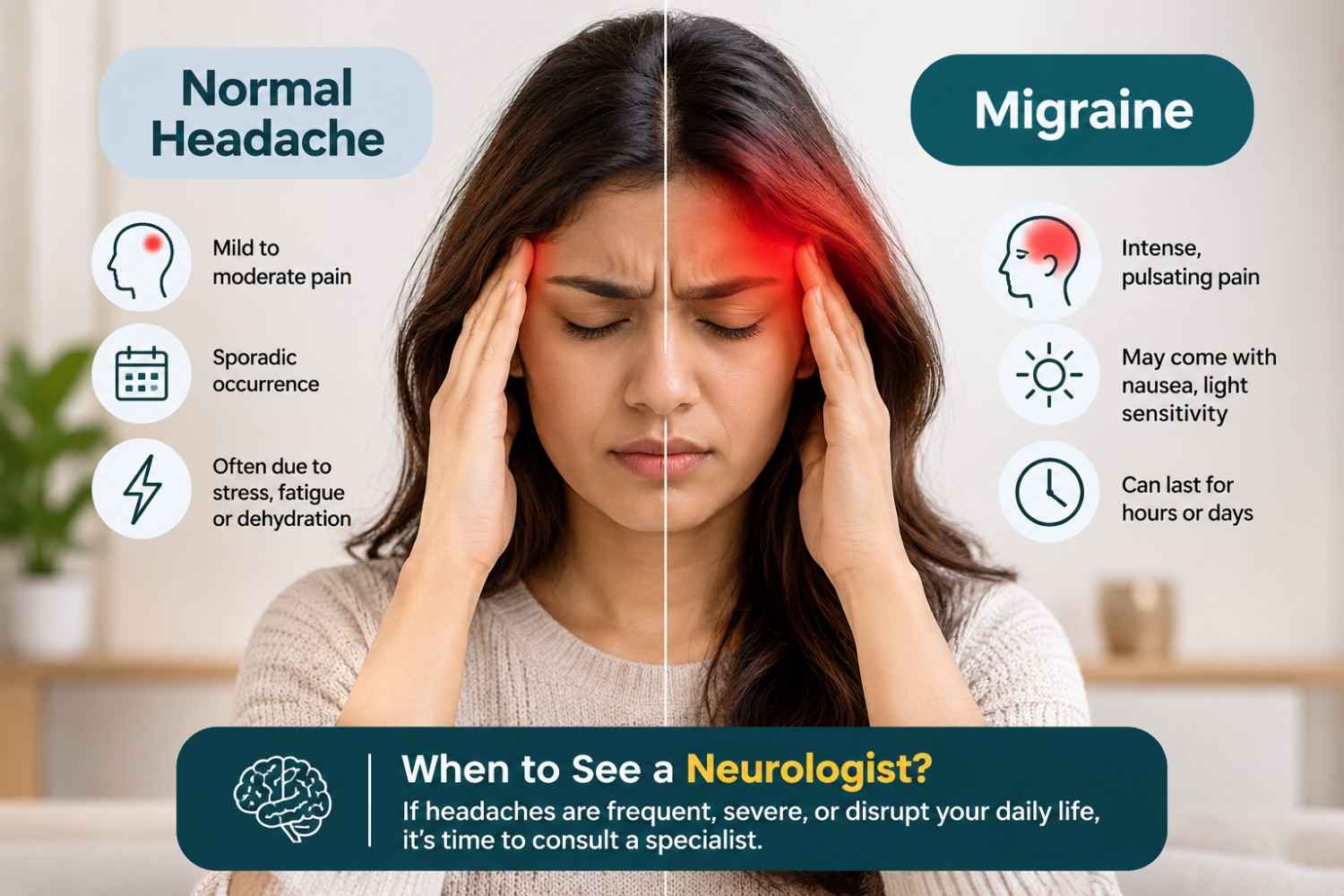
When people say "normal headache", they usually mean a tension headache, the most familiar type. It feels like a tight band around your head, and it's unpleasant but rarely stops your day.
A quick test: can you keep working through it? With a tension headache, usually yes. With a migraine, many people just want a dark, quiet room and to lie down.
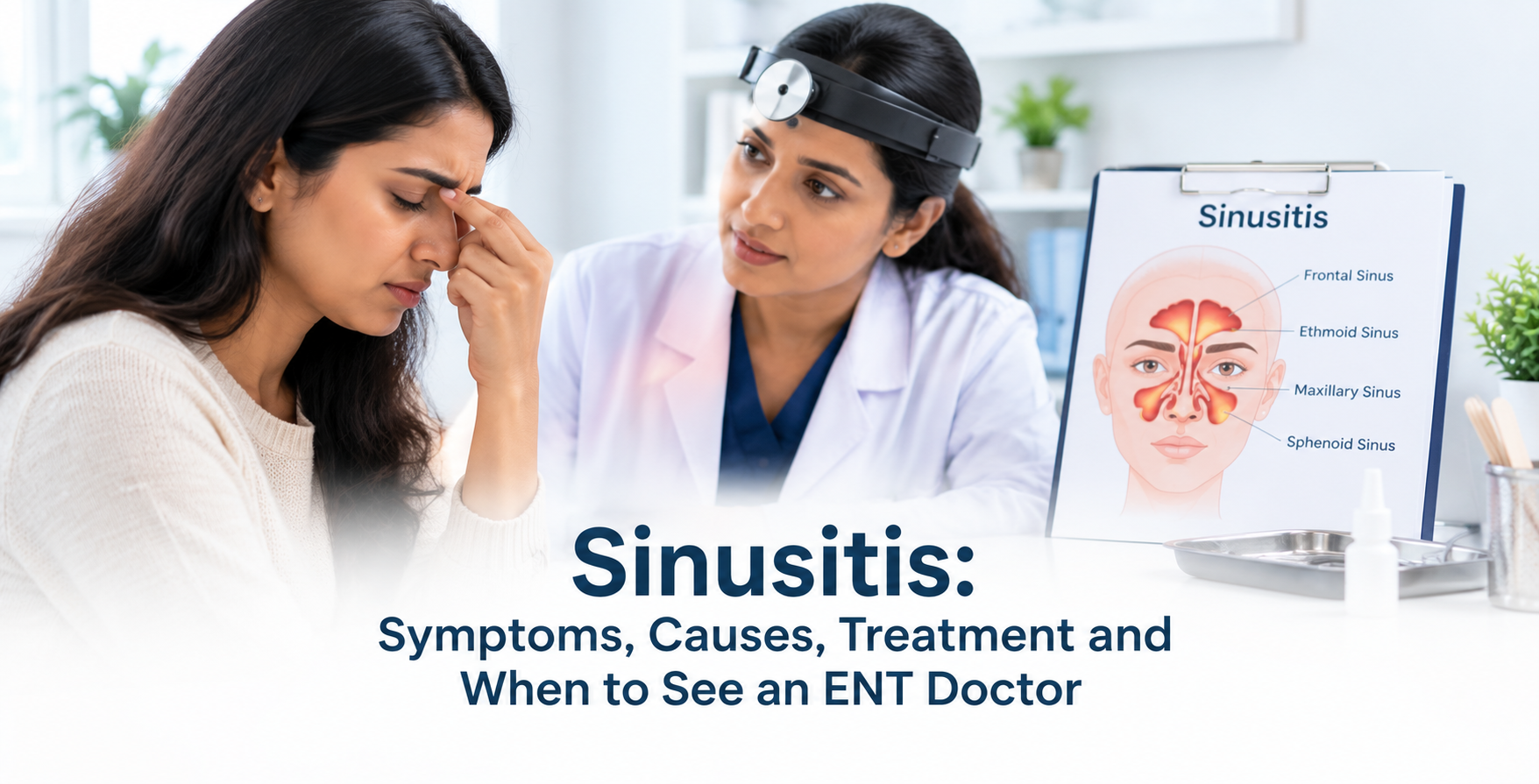
Pain around your cheeks and forehead with a blocked nose may be something else altogether. Our guide to sinusitis symptoms and treatment can help you check.
The classic migraine pain symptoms are a throbbing head pain that's often on one side, feeling or being sick, and being very sensitive to light and sound. Some people are bothered by strong smells as well.
Pain is only one part of it, though. A migraine attack often moves through stages, and the early ones can give you a head start.
Those early signs of migraine headache are worth learning. If you notice the same yawning or cravings before every attack, you may be able to rest, eat or take your medicine sooner. The NHS advises taking painkillers as soon as a migraine headache starts.
Not every migraine knocks you flat. Less severe attacks happen too, and they're easy to mistake for tiredness, acidity or an ordinary headache. You might have a dull one-sided ache, slight queasiness, or find your phone screen a little too bright. If this keeps happening, particularly around your periods or after a poor night's sleep, mention it to a doctor. Some people have no head pain at all during an attack, only vision problems or nausea.
Doctors don't fully know what causes migraine, but it involves changes in the nerves and blood vessels of the brain, and you're more likely to get it if a close relative has it. Certain things can set off an attack, and they differ from person to person:
Skipped or delayed meals: long gaps between meals, or fasting days, can be a trigger.
Sleep changes: this includes too little sleep and too much, such as a long lie-in on Sunday.
Stress: some people get attacks once a stressful week is over.
Periods and hormone changes: attacks around a period can be longer and more severe.
Bright or flashing lights, loud noises and strong smells: think of festival lights, traffic noise or strong perfume.
Too much caffeine, alcohol or tobacco.
Sudden changes in the weather or your surroundings.
Travel: motion sickness can bring on an attack.
You don't have to give up everything on this list. Finding your own pattern is far more useful, and a simple headache diary is the best way to do that.
There's no blood test for migraine. A doctor usually makes the diagnosis by listening to your history and doing a physical and neurological examination. You'll be asked when the headaches start, how long they last, how they feel, and what comes with them. Migraine without aura is generally diagnosed after at least five attacks that follow this typical pattern.
MRI and CT scans aren't usually needed. A doctor may order one if another cause of your headaches is suspected.
Before your visit, try keeping a diary for a few weeks. Note down:
The time each headache started, how bad it was and how long it lasted
Any medicines you took, including ones bought without a prescription
How well you slept the night before
What you ate and drank
Any stress, change in routine or change in weather
Your period dates, if you have periods
Migraine can't be cured, but treatment can make a real difference to how often it happens and how badly it affects you. The plan depends on how severe your attacks are and how often they come.
During an attack: resting in a quiet, dark room, a cool cloth on your forehead and plenty of fluids can help. For less severe attacks, ordinary painkillers may be enough. Stronger migraine-specific medicines and anti-sickness medicines are available on prescription.
Preventing attacks: people who have attacks once a week or more, or severe ones less often, are usually offered daily preventive treatment. It can take time to find what suits you.
Other approaches: relaxation techniques, yoga, regular exercise and cognitive behavioural therapy help some people.
A word of caution about painkillers: try not to take them for more than 2 days a week. Using them more often can lead to more headaches and make migraine harder to treat. If you're reaching for a tablet several times a week, it's time to see a doctor rather than change brands.
Lots of people put up with headaches for years because they assume nothing can be done. Consider booking a visit if:
Your attacks are severe, getting worse or lasting longer than usual
You have attacks more than once a week
Painkillers aren't working, or you need them often
Headaches regularly arrive before or during your period
Headaches are making you miss work, college or family plans
You've started getting a new kind of headache, or your usual pattern has changed
Get medical advice urgently if an attack has lasted more than 72 hours, if aura lasts longer than an hour, or if you have a migraine attack while pregnant or soon after having a baby.
Go to an emergency department straight away if you or someone with you has a headache along with any of these:
Sudden, extremely severe pain
Weakness or numbness in the face, arm or leg, especially on one side
Trouble speaking, walking, balancing or remembering things
Loss of vision, or blurred or double vision
Drowsiness or confusion
A seizure
A very high temperature with a stiff neck, or a rash that doesn't fade under a glass
A recent head injury
Please don't drive yourself. Ask someone to take you, or call an ambulance.
In Kolkata, you can consult Dr. Madhuparna Paul, Consultant Neurologist (MBBS, DNB General Medicine, DM Neurology, MRCP UK), at our Hazra Road clinic. Headache is among Dr. Paul's areas of expertise. Visit our neurologist in Kolkata page to book an appointment.
In Siliguri, you can see Dr. Shveta Gupta, Neurologist (MBBS, DNB, DM Neurology), who has 11 years of experience and manages migraine and headache disorders, through our neurologist in Siliguri service.
Most migraine never needs surgery. If a scan shows a problem in the brain or spine that needs a surgical opinion, Dr. Anurup Saha, Consultant Neurosurgeon (MBBS, MS General Surgery, MCh Neurosurgery), sees patients in Siliguri.
Eat at regular times, and carry a snack if your days run long.
Go to bed and wake up at about the same time, weekends included.
Drink enough water through the day.
Keep active, because too little regular exercise can be a trigger.
Cut down on caffeine if you drink a lot of it.
Make time to unwind, whether that's yoga, a walk or simply time away from your phone.
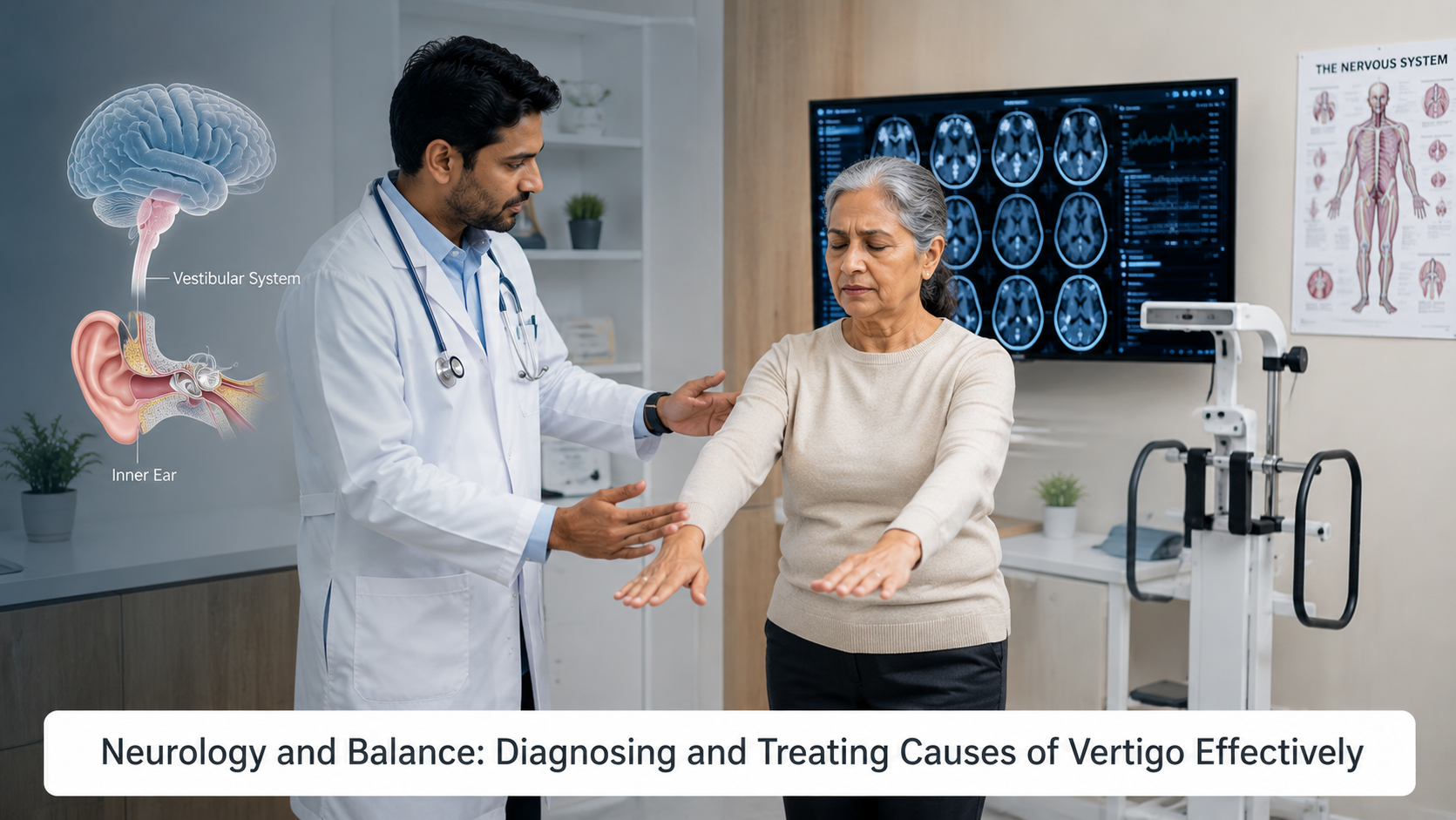
If you also feel dizzy or unsteady, our article on vertigo and balance problems explains how a neurologist can help.
A pressing pain on both sides that lets you carry on is usually a tension headache. A throbbing pain with nausea, light sensitivity or visual changes points more towards migraine. You don't need to work this out alone, and you certainly don't need to keep suffering through it. A good diagnosis often leads to fewer and milder attacks.
If headaches are affecting your life, book a consultation with UniClinic Kolkata – Neurology or UniClinic Siliguri – Neurology.
Yes. Some people have migraine episodes with no head pain at all. They may get vision problems, nausea, vomiting or constipation instead. If this is new for you, see a doctor to rule out other causes.
Yes, migraine affects children as well as adults. Very young children may not be able to explain how they feel, so they might avoid television or screens, or stop playing and lie down in a dark room.
Hormone changes linked to periods and pregnancy seem to be an important trigger, which is likely part of the reason. Many women find their migraine improves after menopause.
It might, early on. Small amounts of caffeine may ease symptoms in the first stages of an attack. Too much caffeine, however, can trigger migraine, so regular large amounts are best avoided.
Often, yes. Most people find their migraine attacks slowly get better as they get older. Even so, a new or changing headache later in life should always be checked by a doctor.
Don't assume so. Some common painkillers, including ibuprofen, are not recommended in pregnancy. Check with your doctor or pharmacist before you take anything, and seek urgent advice if you have a migraine attack while pregnant.
For test bookings and inquiries: Contact UniClinic
Neurology | Cardiology | Endocrinology | Laparoscopic Surgery in Obstetrics & Gynecology | Gynecology & Obstetrics | General Medicine | Gynaecology | Orthopedics | Paediatrics | Diabetology | Ultrasound Imaging | Digital X-Ray | Blood Tests
Neurology | Cardiology | Endocrinology | Laparoscopic Surgery in Obstetrics & Gynecology | Gynecology & Obstetrics | General Medicine | Gynaecology | Orthopedics | Paediatrics | Diabetology | Ultrasound Imaging | Digital X-Ray | Blood Tests
References & Citations
1. NHS (UK) — Headaches.
2. NHS (UK) — Tension Headaches.
3. NHS (UK) — Migraine.
4. National Institute of Neurological Disorders and Stroke (NIH) — Migraine.
5. Kulkarni GB, et al. The Journal of Headache and Pain, 2015 — Headache Disorders and Public Ill-Health in India: Prevalence Estimates in Karnataka State.
6. Cleveland Clinic — Migraine Headaches.
7. International Headache Society (ICHD-3) — Migraine Without Aura: Diagnostic Criteria.
Disclaimer: UniClinic does not represent or warrant that the content or information provided through our blog is accurate, complete, or current, nor that our blog content will be uninterrupted or error-free. We do not guarantee that any defects in our blog content will be corrected, or that our or the server hosting them are free of viruses or other harmful components. UniClinic makes no warranties or representations regarding the use of materials in our blog content concerning their correctness, accuracy, adequacy, usefulness, timeliness, reliability, or otherwise, to the fullest extent permitted by applicable law. Information available via our Platform and blog content may reference products, programs, or services not available in your region. You understand and acknowledge that your sole and exclusive remedy for any defect in or dissatisfaction with our blog content is to cease using them.
Ward No. 14, Niharkana, Nazrul Sarani, Ashram Para, Siliguri, West Bengal 734001
90540 09651
63563 55500
90540 09651
Mon - Sat : 8am - 8pm
Sunday : 8am - 5pm
Quick Links
Company
Resources
Follow Us