Wedding planning in Bengal comes with long lists: the venue, the menu, the guest list, the tattwa. One small blood test rarely makes it onto any of them, even though it can matter a great deal to the family you plan to build.
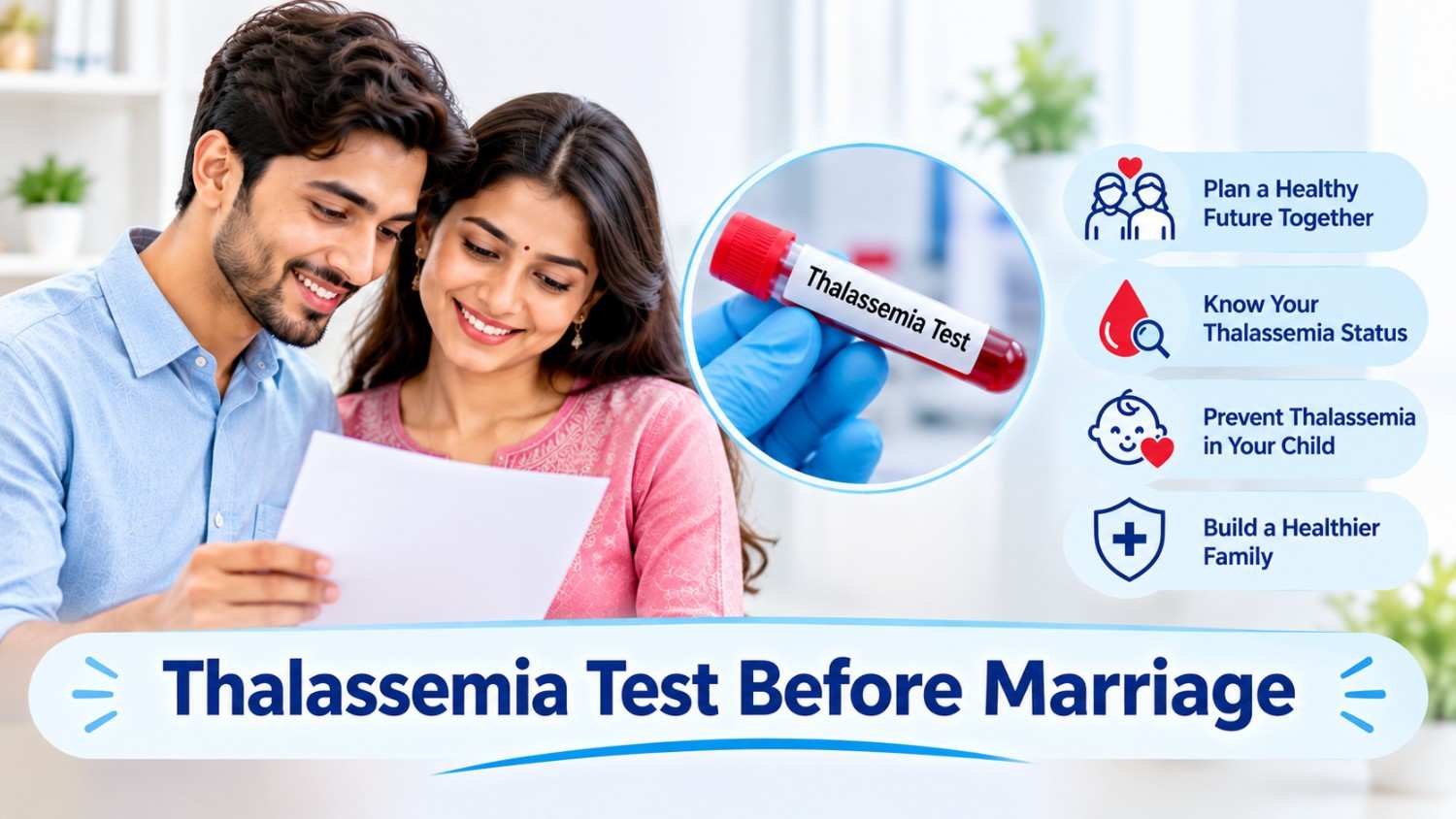
Here's why. You can feel completely healthy and still carry the thalassemia trait without knowing it. If your partner carries it too, each child you have together has a in chance of being born with thalassemia. A blood test can tell you where you stand long before that becomes a worry.
Let's be clear about one thing. This test isn't about calling off a wedding. It's about knowing your risk early, while you still have the most choices.
Thalassemia is a group of inherited conditions that affect haemoglobin, the substance red blood cells use to carry oxygen around the body. You can't catch it from someone, and it isn't caused by anything parents did before or during pregnancy.
The word gets used for two very different situations, and mixing them up causes a lot of unnecessary fear.
So a carrier and a person with thalassemia major live very different lives. A bone marrow or stem cell transplant is the only cure for thalassemia major, and it is only suitable for people with a matching donor.
Carriers are not rare here. In a large multicentre study of college students and pregnant women across six Indian cities, the beta thalassemia trait was found in 3.64% of people screened in Kolkata, one of the highest rates in the study. Another 3.92% in Kolkata carried the HbE trait.5
Put together, that's more than 7 in every 100 people screened at the Kolkata centre. These figures come from one study, and rates differed widely between communities, from 0 to 9.3% across the 59 ethnic groups tested.5 So there's no single number for all of West Bengal. The practical point stays the same: nobody can tell by looking at you, or by checking your family tree, that you're not a carrier.
HbE is a variant of haemoglobin that's relatively common in eastern India. If one partner carries beta thalassemia and the other carries HbE, a baby could inherit a different type of thalassemia major. That's why a good screening test should look for both, not just one.
Most of the time, nothing. Carriers are usually healthy and have no symptoms. That's precisely why so many people don't know they have the trait.
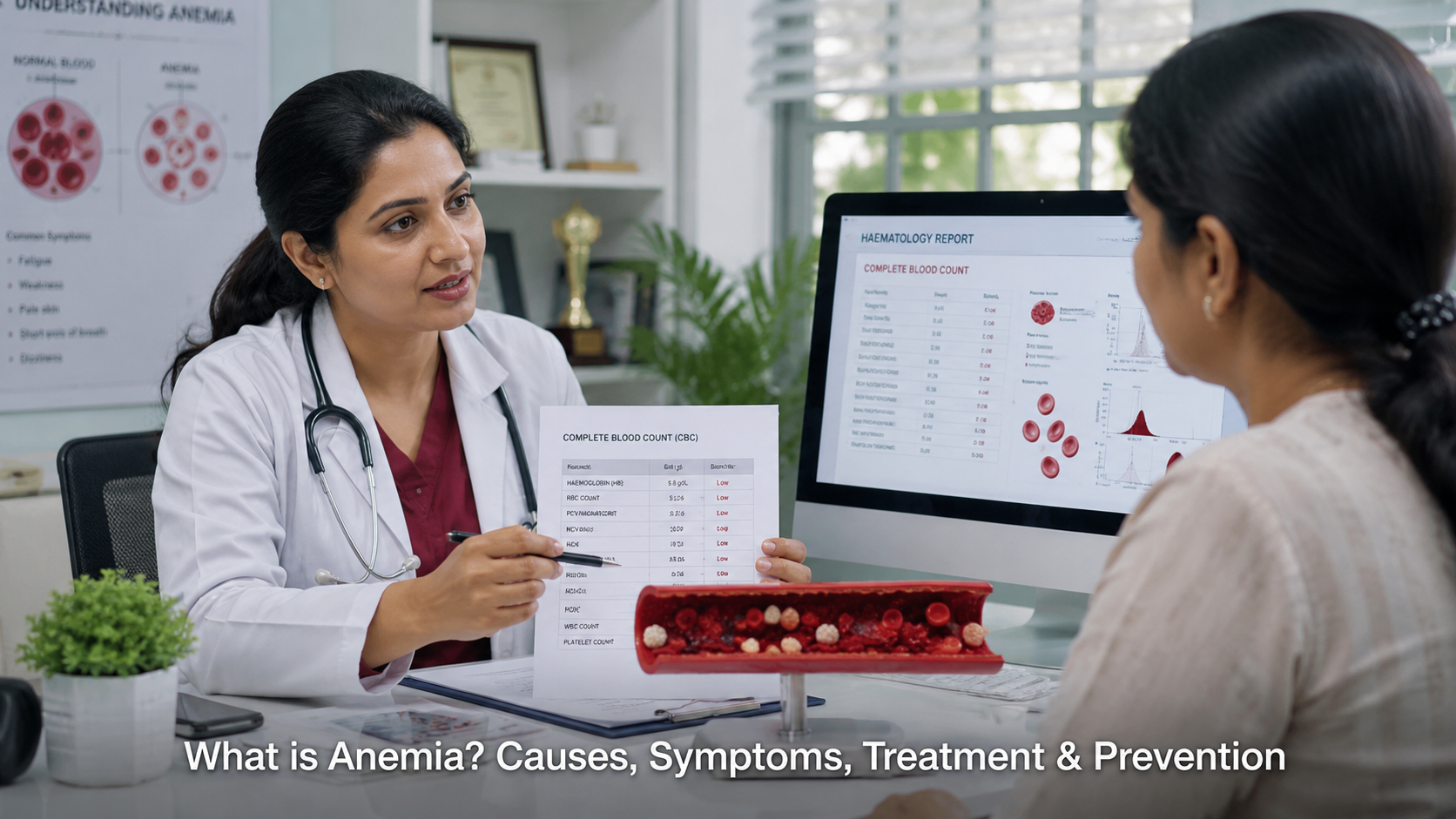
Some carriers have mild anaemia because their red blood cells are smaller than usual. This kind of anaemia is different from iron deficiency and doesn't need treatment.2 If a blood report keeps showing low haemoglobin or small red cells and iron tablets haven't helped, it's worth asking your doctor about thalassemia. Our guide to anaemia causes and treatment explains why it's unwise to take iron without knowing the cause.
This is the question that really matters, so here's how the odds work.
Those chances apply to every pregnancy, not just the first. Having one unaffected child doesn't change the odds for the next.
A thalassemia screening test is just a routine blood draw. Both partners should have it. Testing only one of you gives half the picture, unless that person's result is completely clear and your doctor is happy with it.
At UniClinic, you can book the Hb electrophoresis test in Kolkata or the Hb electrophoresis test in Siliguri, along with a CBC in Siliguri. If you're choosing a pre-marital check-up for men or a pre-marital check-up for women, ask whether a haemoglobin variant test is included, and add it if it isn't.
Before the wedding date is fixed is ideal, and the earlier the better. It gives you both time to take in the result and speak to a specialist without the pressure of a date on the calendar. But there's no wrong time. The test can be done at any age.6
If you're already married or expecting, you haven't missed your chance. Screening works best when it's done early, ideally before 10 weeks of pregnancy. If the mother has the trait, the father is then tested as well.
When both parents are carriers, tests can show whether the baby has inherited thalassemia major:
· Chorionic villus sampling (CVS): usually done between 11 and 14 weeks of pregnancy.
· Amniocentesis: usually done between 15 and 20 weeks of pregnancy.
Whether to have these tests is your decision, and your doctor will explain what's involved. Talk to your gynaecologist in Kolkata or gynaecologist in Siliguri about screening at your first antenatal visit.
Finding out you're both carriers can feel like a blow. Take a breath. It doesn't mean you can't marry, and it doesn't mean you can't have healthy children. It means you should plan with specialist support. Your options may include:
· Genetic counselling: a specialist goes through your exact results and what they mean for your family.
· Early prenatal testing: this can be done in any pregnancy from around 11 weeks, so see your doctor as soon as you know you're pregnant.
· Pre-implantation genetic diagnosis (PGD): embryos created through IVF are checked for the condition before pregnancy begins.
These are personal decisions, and they belong to the two of you.
You don't need to be unwell to see a blood specialist. It's a good idea to book a visit if:
You or your partner tests positive for a thalassemia or HbE trait
Someone in your family has thalassemia or is a known carrier
You have long-standing mild anaemia with no clear cause
You're planning a pregnancy and your partner is a carrier
Your report mentions an unusual haemoglobin and you're not sure what it means
In Kolkata, you can consult Dr. Prerna Pramanik, Consultant Haematologist and Bone Marrow Transplant Physician (MBBS, MD General Medicine, DM Clinical Hematology, PDF Clinical Haematology and Cellular Therapies), at our Hazra Road clinic. Dr. Pramanik's areas of expertise include thalassemia. Visit our hematologist in Kolkata page to book an appointment.
In Siliguri, you can see Dr. Ananya Choudhuri, Consultant Hematologist (MBBS, MD Medicine, DM Clinical Hematology), who has more than 15 years of experience in diagnosing and treating blood disorders, through our hematologist in Siliguri service.
Being a thalassemia carrier isn't an illness, and it isn't anything to be ashamed of. It's simply something worth knowing before you start a family. In West Bengal, where carriers are fairly common, a blood test for both partners is one of the simplest things you can do for your future children.
For test bookings and inquiries: Contact UniClinic
Hematology | Cardiology | Endocrinology | Laparoscopic Surgery in Obstetrics & Gynecology | Gynecology & Obstetrics | General Medicine | Gynaecology | Orthopedics | Paediatrics | Diabetology | Ultrasound Imaging | Digital X-Ray | Blood Tests
Hematology | Cardiology | Endocrinology | Laparoscopic Surgery in Obstetrics & Gynecology | Gynecology & Obstetrics | General Medicine | Gynaecology | Orthopedics | Paediatrics | Diabetology | Ultrasound Imaging | Digital X-Ray | Blood Tests
References & Citations
1. NHS (UK) — Thalassaemia: Overview.
2. NHS (UK) — Thalassaemia Carriers.
3. NHS (UK) — Thalassaemia: Causes.
4. NHS England (GOV.UK) — Information and Choices for Women and Couples at Risk of Having a Baby With Thalassaemia Major.
5. Mohanty D, et al. Journal of Community Genetics, 2013 — Prevalence of ?-thalassemia and Other Haemoglobinopathies in Six Cities in India: A Multicentre Study.
6. NHS (UK) — Thalassaemia: Diagnosis.
7. NHS (UK) — Thalassaemia: Symptoms.
Disclaimer: UniClinic does not represent or warrant that the content or information provided through our blog is accurate, complete, or current, nor that our blog content will be uninterrupted or error-free. We do not guarantee that any defects in our blog content will be corrected, or that our or the server hosting them are free of viruses or other harmful components. UniClinic makes no warranties or representations regarding the use of materials in our blog content concerning their correctness, accuracy, adequacy, usefulness, timeliness, reliability, or otherwise, to the fullest extent permitted by applicable law. Information available via our Platform and blog content may reference products, programs, or services not available in your region. You understand and acknowledge that your sole and exclusive remedy for any defect in or dissatisfaction with our blog content is to cease using them.
Yes. Two carriers can marry and can have healthy children. Because each pregnancy carries a 1 in 4 chance of thalassemia major, they should see a specialist before planning a pregnancy.
No. A carrier will never develop thalassemia major. Thalassemia is decided by the genes you are born with, so the trait stays a trait for life.
Usually not. Your genes don't change, so one reliable result generally lasts a lifetime. Keep the report safely and share it with your partner and your doctor when you plan a pregnancy.
The Hb electrophoresis test at UniClinic can be done without fasting.You can take your sample at any time of the day and eat normally beforehand.
No. Blood group has nothing to do with thalassemia. Two people with matching or compatible blood groups can still both be carriers, so only a haemoglobin test can answer the question.
Yes, it's a good idea. This is often an inherited trait, so you may find that your siblings and other close relatives also have it.Testing is especially helpful for people who plan to marry or have children.
Ward No. 14, Niharkana, Nazrul Sarani, Ashram Para, Siliguri, West Bengal 734001
90540 09651
63563 55500
90540 09651
Mon - Sat : 8am - 8pm
Sunday : 8am - 5pm
Quick Links
Company
Resources
Follow Us