
If you've ever woken up with a pounding headache, a face that feels swollen from the inside, and a nose that simply won't drain, you already know how miserable a sinus infection can be. Sinusitis — sometimes referred to broadly as sinus disease — is one of the most common reasons people visit a doctor, affecting close to 30 million adults in the United States every year.¹ For most people it's a short, frustrating illness. For others, it becomes a chronic condition that disrupts sleep, work, and quality of life for months at a time.
In this guide, the ENT team at Uniclinic Health breaks down everything you need to know about sinusitis — what causes it, how to recognize the symptoms, which sinus infection treatment options actually work, and the specific warning signs that mean it's time to stop self-treating and see an ENT (ear, nose, and throat) specialist.
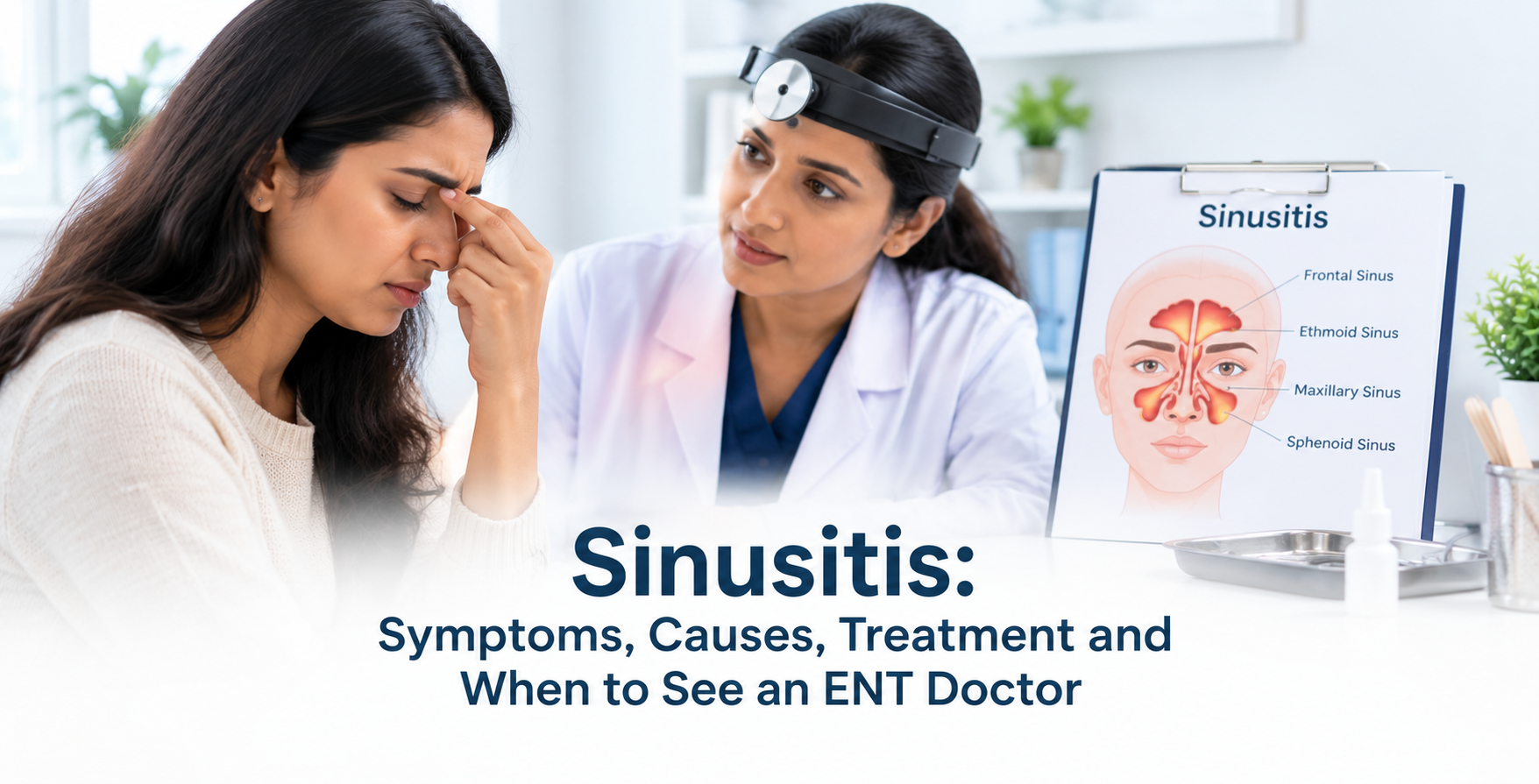
Sinusitis is the inflammation or swelling of the tissue lining the sinuses — the hollow, air-filled cavities behind your forehead, cheekbones, and eyes. Normally, these sinuses drain mucus freely through small channels into the nose. When you catch a cold, develop allergies, or have a structural nasal issue, that tissue can swell, blocking drainage. Mucus builds up, pressure increases, and bacteria or viruses can multiply in the trapped fluid — resulting in a sinus infection.
Healthcare providers classify sinusitis by how long it lasts:
Acute sinusitis typically follows a cold or bout of allergies and lasts less than four weeks. Most cases are viral and resolve on their own within seven to ten days.
Symptoms that persist for four to twelve weeks are considered subacute — often a sign that the initial infection hasn't fully cleared or that an underlying issue is prolonging inflammation.
When sinus symptoms last 12 weeks or longer, despite treatment attempts, it's classified as chronic sinusitis (chronic rhinosinusitis). This form of sinus disease affects an estimated 12% of U.S. adults and often requires evaluation by an ENT specialist.
This refers to four or more acute sinusitis episodes within a single year, with symptom-free periods in between.
Sinus problems can look different from person to person, but the most frequently reported symptoms include:
Facial pain, pressure, or tenderness around the eyes, cheeks, nose, or forehead — often worse when bending forward
Thick, discolored (yellow or green) nasal discharge
Postnasal drip that causes a sore or scratchy throat
Nasal congestion or blockage that makes it hard to breathe through the nose
Reduced sense of smell and taste
Headache
Ear pressure or pain
Bad breath (halitosis)
Fatigue
Cough, which often worsens at night
Low-grade fever (more common with acute bacterial infections)
Because sinusitis frequently begins with cold-like symptoms, it's easy to confuse it with a simple nose infection or common cold in the first few days. The distinction usually becomes clear as symptoms progress.
The terms are often used interchangeably, but there's a meaningful difference. A "nose infection" usually refers to inflammation limited to the nasal passages (rhinitis) — think of the common cold, which causes runny nose, sneezing, and mild congestion that typically clears within a week.
A sinus infection (sinusitis) goes a step further: the inflammation extends into the sinus cavities themselves, causing facial pressure, thicker discharge, and symptoms that last longer than a typical cold. In fact, most cases start out as simple rhinitis and are technically "rhinosinusitis," since the nose and sinuses share the same lining and rarely become inflamed in isolation.?
Understanding the root cause of your sinus disease is key to choosing the right treatment. Common causes include:
Viral infections — The common cold is the leading trigger of acute sinusitis. Most viral cases resolve on their own without antibiotics.
Bacterial infections — When a viral infection lingers or worsens after 10 days, bacteria can take hold, leading to acute bacterial rhinosinusitis, which sometimes requires antibiotics.?
Allergies (allergic rhinitis) — Pollen, dust mites, pet dander, and mold can inflame the nasal lining and block sinus drainage, making allergy sufferers more prone to recurring sinus problems.
Nasal polyps — Soft, noncancerous growths in the nasal lining can obstruct airflow and mucus drainage, contributing to chronic sinusitis.
Deviated nasal septum — A crooked wall between the nostrils can restrict one or both sinus passages.
Fungal infections — Less common, but more likely in people with weakened immune systems or certain chronic sinus conditions.
Environmental irritants — Cigarette smoke, air pollution, and strong chemical fumes can irritate and inflame sinus tissue.
Dental infections — An infected upper tooth can sometimes spread infection into the adjacent maxillary sinus.
Weakened immune system or underlying conditions — Conditions such as cystic fibrosis, GERD, and immune deficiencies can increase susceptibility to chronic sinus disease.
For occasional, short-lived symptoms, diagnosis is usually based on a physical exam and symptom history. However, if sinus problems are frequent or prolonged, an ENT doctor may use:
Nasal endoscopy — A thin, lighted scope to directly visualize the nasal passages and sinus openings
CT scan — Detailed cross-sectional imaging to assess blockages, structural issues, or the extent of inflammation
Allergy testing — To identify environmental triggers contributing to recurrent sinusitis
Nasal or sinus cultures — In select cases, to identify resistant bacteria or fungal involvement
Treatment depends on whether the infection is viral, bacterial, allergic, or structural — and on whether it's acute or chronic.
Most acute, viral cases improve with supportive home care:
Saline nasal irrigation (e.g., a neti pot or squeeze bottle) to flush mucus and allergens
Steam inhalation and warm compresses over the sinuses to ease pressure
Staying well-hydrated to thin mucus
Adequate rest
Over-the-counter pain relievers (acetaminophen or ibuprofen) for headache and facial pain
When symptoms don't resolve with home care, an ENT or primary care provider may recommend:
Intranasal corticosteroid sprays to reduce inflammation and swelling
Decongestants (oral or nasal spray) for short-term relief — nasal sprays should not be used for more than 3–5 days to avoid rebound congestion
Antihistamines if allergies are a contributing factor
Antibiotics — reserved for confirmed or strongly suspected bacterial sinusitis, typically when symptoms last more than 10 days without improvement or worsen after initially improving?
Oral or injectable corticosteroids for significant inflammation, including cases involving nasal polyps
When chronic sinusitis doesn't respond to medication, ENT specialists may recommend:
Balloon sinuplasty — A minimally invasive procedure that uses a small balloon catheter to gently widen blocked sinus passages
Functional endoscopic sinus surgery (FESS) — Used to remove polyps, correct structural blockages, and improve drainage in cases of chronic rhinosinusitis that haven't responded to medical treatment
Septoplasty — Surgical correction of a severely deviated septum contributing to chronic blockage
Biologic therapies — Newer injectable medications for chronic sinusitis with nasal polyps in select patients
Not every case of sinusitis needs a specialist. But you should schedule an appointment with an ENT doctor if you experience any of the following:
Sinus symptoms lasting more than 10 days without improvement
Symptoms that improve, then suddenly get worse ("double sickening")
Recurring sinusitis episodes — four or more per year
Symptoms persisting for 12 weeks or longer (chronic sinusitis)?
High fever (above 102°F/38.9°C)
Severe facial or dental pain that doesn't respond to over-the-counter medication
Swelling or redness around the eyes
Vision changes, double vision, or difficulty moving the eyes
Severe headache, confusion, stiff neck, or other neurological symptoms (seek emergency care immediately)
Sinus problems that keep coming back despite antibiotics or other treatment
Suspected nasal polyps or a deviated septum affecting breathing
An ENT specialist can identify the underlying structural or chronic cause of your sinus disease — something a short-term course of antibiotics often can't fix — and offer targeted, long-term solutions.
An ENT specialist can assess whether recurring sinus problems are related to infection, allergies, nasal polyps, a deviated septum or another underlying condition.
At UniClinic, patients can access ENT care in both Kolkata and Siliguri. For Kolkata patients, Dr. Paroma Mukherjee can be linked from this section as an appropriate doctor profile. For Siliguri patients, relevant ENT specialists such as Dr. Goutam Das and Dr. Sandipan Naskar can be linked to their respective profiles.
While sinusitis isn't always preventable, these habits can lower your risk:
Wash your hands frequently to reduce exposure to cold and flu viruses
Manage seasonal and environmental allergies proactively
Use a humidifier to keep nasal passages moist, especially in dry climates
Avoid cigarette smoke and heavily polluted air
Rinse your sinuses with saline solution regularly if you're prone to congestion
Stay up to date on vaccinations, including annual flu shots
Treat allergies and colds early to keep them from progressing into sinusitis
Sinusitis can range from a temporary problem after a cold to a recurring or chronic condition requiring specialist evaluation. Understanding the symptoms, possible causes and appropriate treatment options can help you recognise when self-care may be sufficient and when professional medical advice is needed.
If sinus problems keep returning, last for several weeks or interfere with your daily life, an ENT specialist can help identify the underlying cause and recommend an appropriate treatment plan. Patients in Kolkata can explore UniClinic Kolkata – ENT, while patients in Siliguri can consult the UniClinic Siliguri – ENT team.
For mild, early-stage sinusitis, the fastest relief typically comes from a combination approach: saline nasal irrigation two to three times a day to physically flush out mucus and allergens, steam inhalation to loosen congestion, staying well-hydrated, and using an over-the-counter pain reliever for facial pressure and headache. A short course of a decongestant nasal spray (no more than 3–5 days) can also provide quick symptom relief. However, "fast" home relief addresses symptoms, not necessarily the underlying infection — if you don't notice improvement within a few days, it's worth checking in with a doctor rather than continuing to self-treat.
Most acute cases caused by a virus resolve within 7 to 10 days, similar to a common cold.² If symptoms last longer than 10 days without improving, or if they seem to improve and then suddenly worsen, that's often a sign of a secondary bacterial infection, which may need antibiotics. Sinus symptoms lasting 4 to 12 weeks are considered subacute, and anything persisting beyond 12 weeks is classified as chronic sinusitis, which usually requires evaluation and ongoing management by an ENT specialist.
Sinusitis itself — the inflammation and blocked sinuses — is not contagious. However, the viruses that commonly trigger it, such as the rhinovirus that causes the common cold, are contagious and can spread through respiratory droplets or contaminated surfaces. So while you can't "catch" someone else's sinusitis directly, you can catch the underlying cold or flu virus that may go on to cause it in you. Secondary bacterial infections that develop this way are generally not considered contagious in the same manner.
Yes. Allergic rhinitis is one of the most common contributors to chronic sinus disease. When allergens like pollen, dust mites, mold, or pet dander trigger ongoing inflammation in the nasal lining, the swelling can block the small openings that allow sinuses to drain properly. Over time, this repeated blockage creates an environment where mucus stagnates and infections recur, and it can also contribute to the development of nasal polyps. Identifying and managing allergy triggers — through antihistamines, nasal steroids, allergy testing, or immunotherapy — is often a key part of treating recurrent or chronic sinusitis.
Sinus surgery is generally considered only after medical treatments — such as nasal steroids, saline irrigation, antihistamines, and antibiotics when appropriate — have failed to resolve chronic or recurrent sinusitis. According to clinical guidelines from the American Academy of Otolaryngology–Head and Neck Surgery, procedures like functional endoscopic sinus surgery (FESS) are typically indicated for chronic rhinosinusitis (with or without nasal polyps) that is confirmed by endoscopy or CT imaging and has not responded to appropriate medical management.? Surgery may also be recommended sooner for structural issues like a severely deviated septum, significant nasal polyps blocking the airway, or complications such as the spread of infection beyond the sinuses. An ENT specialist can evaluate your specific case and imaging to determine whether surgery — and which type — is the right next step.
Occasional sinus congestion is common and usually nothing to worry about. But when sinus problems keep returning, drag on for weeks, or fail to respond to standard treatment, it's a sign that something more is going on — and that's exactly when an ENT specialist can help. At Uniclinic Health, our ENT team diagnoses the root cause of your sinus disease and builds a treatment plan suited to you, from conservative medical management to advanced, minimally invasive procedures.
For test bookings and inquiries: Contact UniClinic
Cardiology | Endocrinology | Laparoscopic Surgery in Obstetrics & Gynecology | Gynecology & Obstetrics | General Medicine | Gynaecology | Orthopedics | Paediatrics | Diabetology | Ultrasound Imaging | Digital X-Ray | Blood Tests
Cardiology | Endocrinology | Laparoscopic Surgery in Obstetrics & Gynecology | Gynecology & Obstetrics | General Medicine | Gynaecology | Orthopedics | Paediatrics | Diabetology | Ultrasound Imaging | Digital X-Ray | Blood Tests
References & Citations
Centers for Disease Control and Prevention (CDC) — Diagnosing and Treating Acute Bacterial Rhinosinusitis: New Guidelines from the Infectious Diseases Society of America.
Mayo Clinic — Acute sinusitis: Symptoms and causes.
Cleveland Clinic — Sinus Infection (Sinusitis): Causes, Symptoms & Treatment.
American Academy of Otolaryngology–Head and Neck Surgery (AAO-HNS) — Clinical Practice Guideline: Adult Sinusitis Update.
American Academy of Otolaryngology–Head and Neck Surgery (AAO-HNS) — New Clinical Practice Guideline for the Surgical Management of Chronic Rhinosinusitis in Adults.
University of Utah Health — When to See a Sinus Specialist.
Peters AT, et al. — Prevalence of Potential Adult Chronic Rhinosinusitis Symptoms in the United States. National Library of Medicine, PubMed.
6C, Hazra Road, Near Sujata Smriti Sadan, Bakul Bagan, Kalighat, Kolkata, West Bengal 700026
90540 08864
63563 55500
70690 05888
Mon - Sat : 8am - 8pm
Sunday : 8am - 5pm
Quick Links
Company
Resources
Follow Us









.jpg)


 Meaning, Causes, Symptoms, Treatment & Types.png)