It's late, dinner was heavy, and there's a strange pressure in your chest. "Must be gas," you tell yourself. You take an antacid, lie down and wait for it to pass.
That's one of the most dangerous moments in a heart attack, because a heart attack really can feel like indigestion. And not every one starts with the sudden, crushing pain we've all seen in films. Symptoms can begin slowly, feel mild, and come and go over several hours.
Knowing the early signs of heart attack can help you act when acting matters most. Treatment works best when it starts quickly, and every minute counts.
Stop reading and act if you or someone near you has chest pain or pressure, trouble breathing, or any of the symptoms below. It's always better to go to hospital and be told it was nothing.
1. Call for emergency help. Dial 112 or your local ambulance service straight away.
2. Go to the nearest hospital with an emergency department. A heart attack needs hospital treatment, so don't wait for a clinic appointment. Don't drive yourself. If an ambulance can't reach you quickly, ask someone else to take you.
3. Sit down and rest. Sit on the floor with your knees bent and your back supported, or on a chair if that's easier.
4. Take aspirin if you have it. The usual advice is 300 mg, unless you're allergic to aspirin. If you've been prescribed angina spray or tablets, use them as directed.
5. If the person stops responding and stops breathing, start CPR and keep going until help arrives.
A heart attack happens when blood flow to part of the heart is blocked, usually by a blood clot in a coronary artery that's already narrowed by fatty plaque. Without enough blood and oxygen, that part of the heart muscle starts to get damaged. The longer the blockage stays, the greater the damage, which is why speed matters so much.
Some people get warning signs before the main event. You might have mild chest discomfort that comes and goes over a few days or weeks, or feel worn out and unwell for no clear reason.
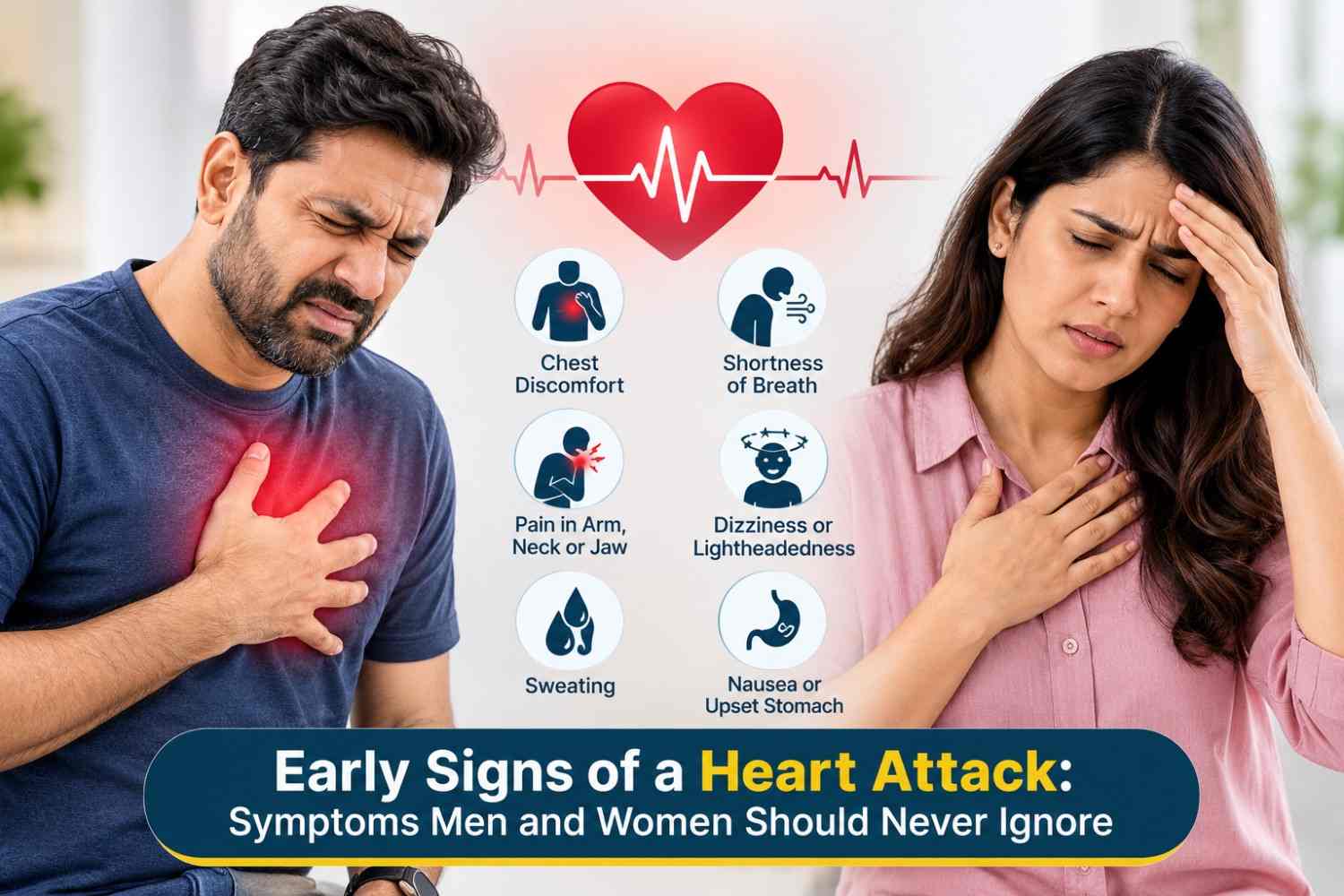
These are the symptoms to take seriously. You may have just one or two of them, not the whole list.
Chest pain is the most common symptom for both men and women, so please don't think of this as "male" and "female" heart attacks. The difference lies in what else may come with it, and in how often the warning signs get brushed aside.
The picture many people recognise is a heavy pressure in the chest that spreads to the left arm or jaw, with a cold sweat and breathlessness. Even so, many men talk themselves out of it. They blame acidity, finish the meeting or go for a walk to shake it off. Pushing through can cost precious time.
Women can have chest pain too, but they're more likely than men to also have pain in the shoulder, back or arm, shortness of breath, unusual tiredness and weakness, an upset stomach and anxiety. These symptoms can even appear without any chest pain.
Because they don't match the picture most people have in mind, women may play them down and reach hospital later. That delay raises the risk of serious problems afterwards. If a woman in your family says she feels "not right" with these symptoms, take it seriously, even if she insists it's nothing.
Some heart attacks cause very mild symptoms or none at all. These silent heart attacks are more common in older adults and in people with diabetes, so regular check-ups matter even more for them.
This is the question most families ask at 2 am. There's no safe way to answer it at home, but this may help you decide how urgently to act.
If you're in any doubt, treat it as a heart attack. Feeling better after an antacid doesn't prove it wasn't your heart. People with known angina should remember that angina pain usually eases within minutes of rest or medicine. Pain that doesn't ease needs emergency care.
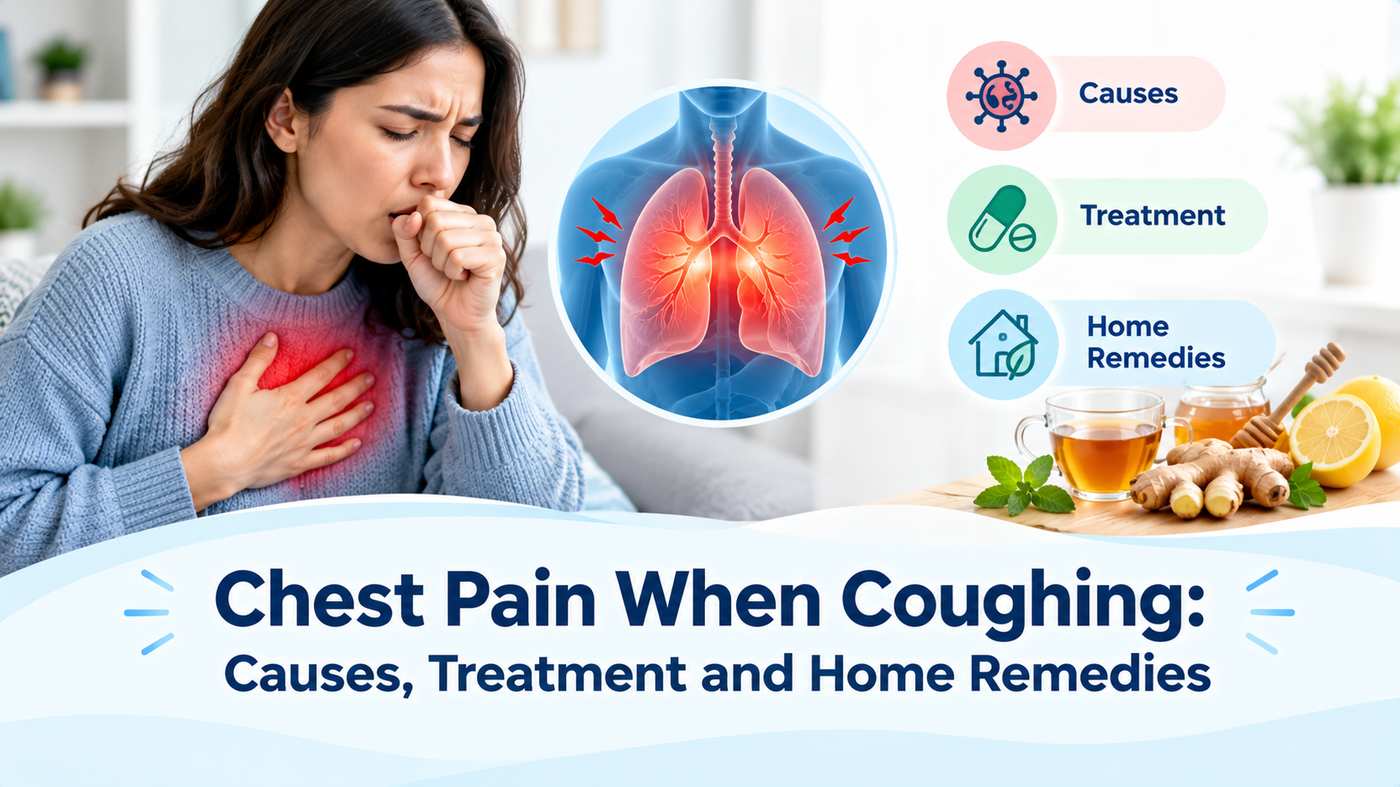
Chest pain has many other causes too. If yours gets worse when you cough or breathe deeply, our guide to chest pain when coughing explains the possible reasons.
You're more likely to have a heart attack if you:
Smoke or use other tobacco products
Have high blood pressure, high cholesterol or diabetes
Are living with overweight or obesity
Have a close relative who has had a heart attack
Don't get enough physical activity
Often eat foods high in salt, sugar or saturated fat
Are a man over 45, or a woman over 50 or past menopause
Heart attacks aren't just a problem of old age here. In the large international INTERHEART study, South Asians had their first heart attack at an average age of 53, compared with about 59 in other countries. The researchers linked this mainly to higher levels of risk factors at younger ages. That's actually hopeful, because most of those risk factors can be changed.
A heart checkup can't predict every heart attack, but it can catch the problems that lead to one while there's still time to act. If you have any of the risk factors above, ask your doctor when you should start. Depending on your age and health, it may include:
Our guide to annual health checkups by age group shows where these tests fit into a yearly routine, and you can also look through our health packages in Kolkata and Siliguri.
These situations aren't emergencies, but they shouldn't wait for months either. Book an appointment if you:
Get chest discomfort or breathlessness when you walk or climb stairs, even if it settles with rest
Feel more tired than usual when doing things you used to manage easily
Notice palpitations or episodes of dizziness
Have high blood pressure, high cholesterol or diabetes that isn't under control
Have a family history of heart disease at a young age
Have had a heart attack or heart procedure and need regular follow-up
Remember, chest pain that's happening right now needs an emergency department, not an appointment.
In Kolkata, you can consult Dr. Aditya Verma, Consultant Interventional Cardiologist (MBBS, MD, DNB, DM), at our Hazra Road clinic. Visit our cardiologist in Kolkata page to book an appointment.
In Siliguri, you can see Dr. Bibek Agarwal, Senior Interventional Cardiologist (MBBS, MD, DM Cardiology), who has more than 13 years of experience in heart care, or Dr. Ashutosh Kumar, Senior Consultant in Cardiology and Cardiac Electrophysiology, who has more than 19 years of experience, through our cardiologist in Siliguri service.
You can't always prevent a heart attack, but everyday choices can reduce your risk.
Stop smoking and chewing tobacco. Ask for help if you've tried before.
Keep your blood pressure, cholesterol and blood sugar at healthy levels, and take prescribed medicines regularly.
Eat more vegetables, fruit and whole grains.
Limit salt to about one teaspoon a day from all sources, and go easy on ghee, butter and fried snacks.
Stay active most days, even if it's a brisk walk.
Work towards a healthy weight and cut down on alcohol.
A heart attack doesn't always look the way it does in films. It can feel like gas, a sore jaw, or a tiredness you can't explain. Women, older adults and people with diabetes may have especially subtle symptoms. If something feels wrong, trust that feeling and get to a hospital quickly.
And if you're worried about your risk but have no symptoms today, this is the right time to act. Book a heart checkup with UniClinic Kolkata – Cardiology or UniClinic Siliguri – Cardiology.
It varies. Some people notice mild chest discomfort or unexplained tiredness that comes and goes for days or weeks. Others have no warning at all, and symptoms begin suddenly.
No. A heart attack happens when blood flow to part of the heart muscle is suddenly lost. In a cardiac arrest, the heart suddenly stops pumping blood around the body. A heart attack can lead to a cardiac arrest, and both are emergencies.
Yes. Risk rises with age, but younger adults can have heart attacks too, especially if they smoke or have diabetes, high blood pressure, high cholesterol or a strong family history. Being young is never a reason to ignore chest pain.
It can. Early tests may not always pick up a heart attack, especially an unusual one. Doctors often repeat the ECG and use blood tests as well, so a single normal report should not reassure you if your symptoms continue.
No. Left arm pain is often caused by muscles, joints or nerves. It's more worrying when it starts suddenly or comes with chest discomfort, sweating, breathlessness or nausea. In that case, get emergency help.
It differs from person to person. Some people recover within several weeks, while others need months or longer. Most people can return to their normal activities with medicines, follow-up care and a cardiac rehabilitation plan.
For test bookings and inquiries: Contact UniClinic
Cardiology | Endocrinology | Laparoscopic Surgery in Obstetrics & Gynecology | Gynecology & Obstetrics | General Medicine | Gynaecology | Orthopedics | Paediatrics | Diabetology | Ultrasound Imaging | Digital X-Ray | Blood Tests
Cardiology | Endocrinology | Laparoscopic Surgery in Obstetrics & Gynecology | Gynecology & Obstetrics | General Medicine | Gynaecology | Orthopedics | Paediatrics | Diabetology | Ultrasound Imaging | Digital X-Ray | Blood Tests
References & Citations
1. NHS (UK) — Heart Attack.
2. National Heart, Lung, and Blood Institute (NIH) — Heart Attack Symptoms.
3. National Heart, Lung, and Blood Institute (NIH) — Heart Attacks in Women.
4. Cleveland Clinic — Heart Attack (Myocardial Infarction).
5. British Heart Foundation — Heart Attack: Symptoms, Causes and Treatment.
6. Joshi P, et al. JAMA, 2007 — Risk Factors for Early Myocardial Infarction in South Asians Compared With Individuals in Other Countries.
7. NHS (UK) — Coronary Heart Disease: Prevention.
Disclaimer: UniClinic does not represent or warrant that the content or information provided through our blog is accurate, complete, or current, nor that our blog content will be uninterrupted or error-free. We do not guarantee that any defects in our blog content will be corrected, or that our or the server hosting them are free of viruses or other harmful components. UniClinic makes no warranties or representations regarding the use of materials in our blog content concerning their correctness, accuracy, adequacy, usefulness, timeliness, reliability, or otherwise, to the fullest extent permitted by applicable law. Information available via our Platform and blog content may reference products, programs, or services not available in your region. You understand and acknowledge that your sole and exclusive remedy for any defect in or dissatisfaction with our blog content is to cease using them
6C, Hazra Road, Near Sujata Smriti Sadan, Bakul Bagan, Kalighat, Kolkata, West Bengal 700026
90540 08864
63563 55500
70690 05888
Mon - Sat : 8am - 8pm
Sunday : 8am - 5pm
Quick Links
Company
Resources
Follow Us